Decide £300–£3,000
The best walnut dining tables: eight options from £300 to £3,000
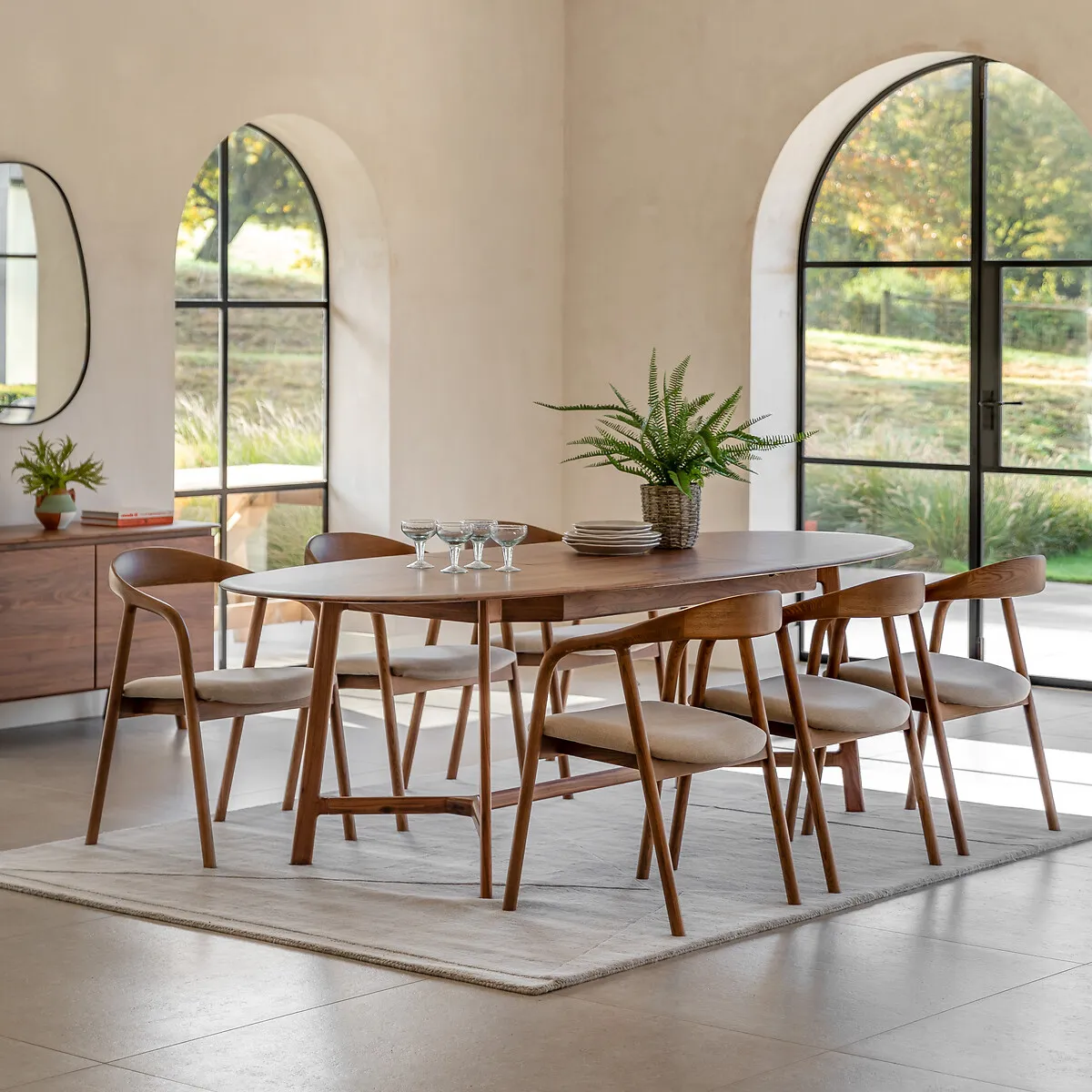
Black walnut is dense — around 610 kg/m³, heavier than the engineered wood most flat-pack furniture leans on — and it was, for a brief window in the 1940s and 50s, cheap. American studio makers built the mid-century canon out of it for that reason: George Nakashima, Paul McCobb, and the Dunbar workshop under Edward Wormley all reached for black walnut because it was abundant and affordable before export demand pushed the price up. What they understood, and what most furniture marketing since has forgotten, is the thing that makes walnut worth its premium: the grain does enough visual work on its own that the design around it can be reduced to almost nothing. A walnut table is never inert in the way a plain white one is. The interest is in the material, not in anything done to it.
Which is the problem with most tables sold as “walnut”. Below around £900, the word usually describes a finish, not a structure — a sliver of walnut veneer over MDF, or a stain over a cheaper species entirely, and the product description will not always make the difference obvious. It matters more than any aesthetic question, and we covered a parallel version of it in the Eames DSW guide: what you are paying for is not always what you think. So before the tables, the material.
What you’re actually buying
There are three things a shop can mean when it writes “walnut”, and they are not close to equal.
Solid walnut is boards of the wood itself, all the way through. It is heavy, it develops a patina — oiling deepens the tone on day one, and years of daylight slowly mellow American black walnut toward a softer, honeyed brown — and, crucially, it is repairable. A scratch or a ring can be sanded back and re-oiled. A solid walnut table has a realistic second life; it can be passed on, refinished, and used again in fifteen years looking better than it does now.
Walnut veneer over engineered wood is a thin layer of real walnut bonded to an MDF or chipboard core. The surface is genuine wood, so it photographs identically to the solid version, and a well-made veneer is a perfectly reasonable object. But the core is not walnut, the table is lighter, and the surface cannot be sanded — once you wear through the veneer, that is the end of it. It does not develop patina so much as wear.
Walnut finish is the most slippery term: a stain or dye applied to a different wood — often ash or rubberwood — to approximate the colour. It can look convincing and the underlying wood may be perfectly solid, but it is walnut in tone only. Knowing which of the three you are buying is the entire decision. The price tiers below track it closely.
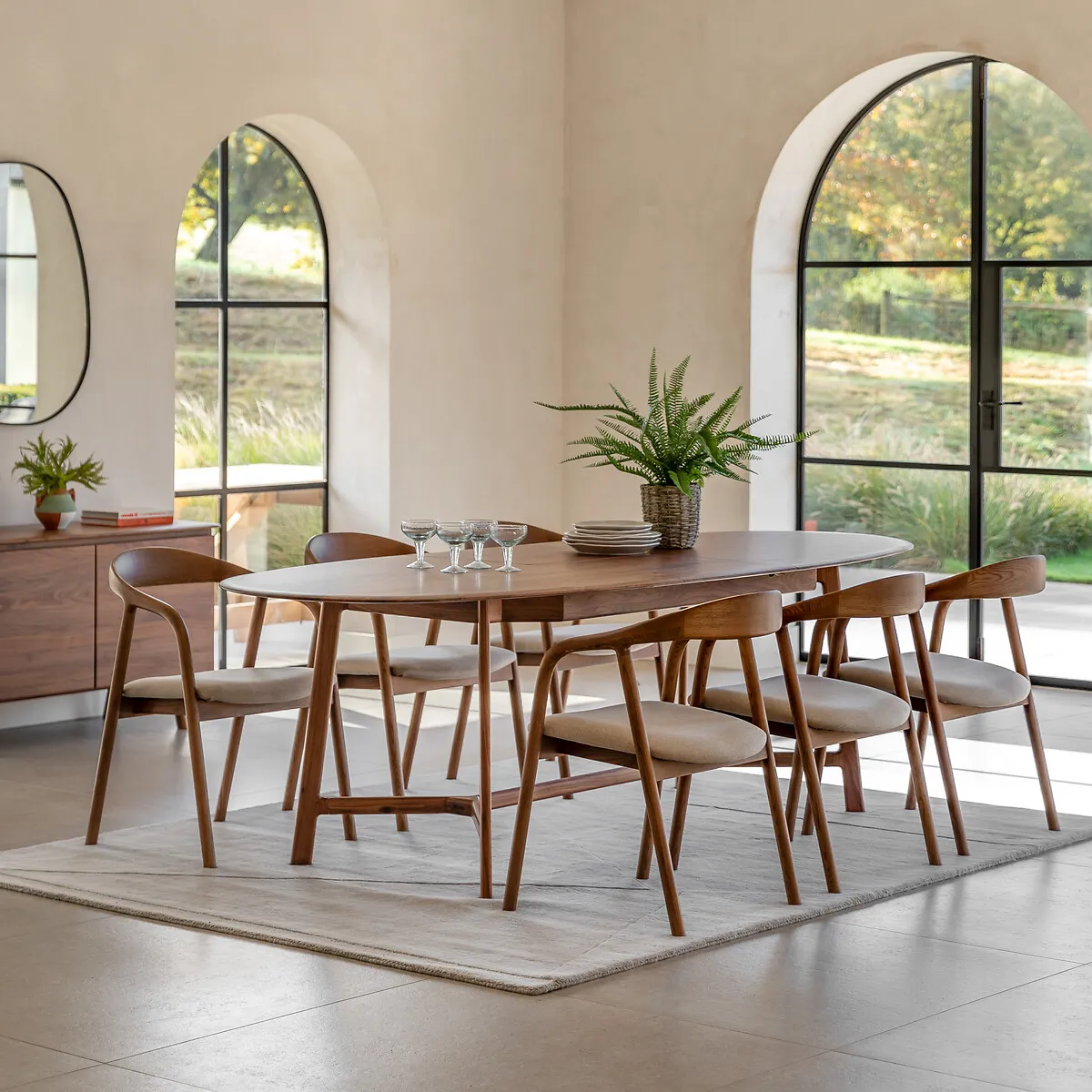
This is the one to buy if the budget stretches to it. The Murwara is solid walnut — not veneer, not a finish — in an extendable oval that seats four to six, and at £1,499 it is the cheapest table here that gives you the actual material with a design lineage that makes sense. The oval shape and the colour do the work; the table asks nothing more of the room around it. Everything in the case for walnut made above applies to this table specifically: it will take a scratch and recover from it, it will mellow rather than wear, and it is the rare object on this list that will plausibly outlast the person buying it. If you can afford one solid-wood table and want it to be walnut, this is it.
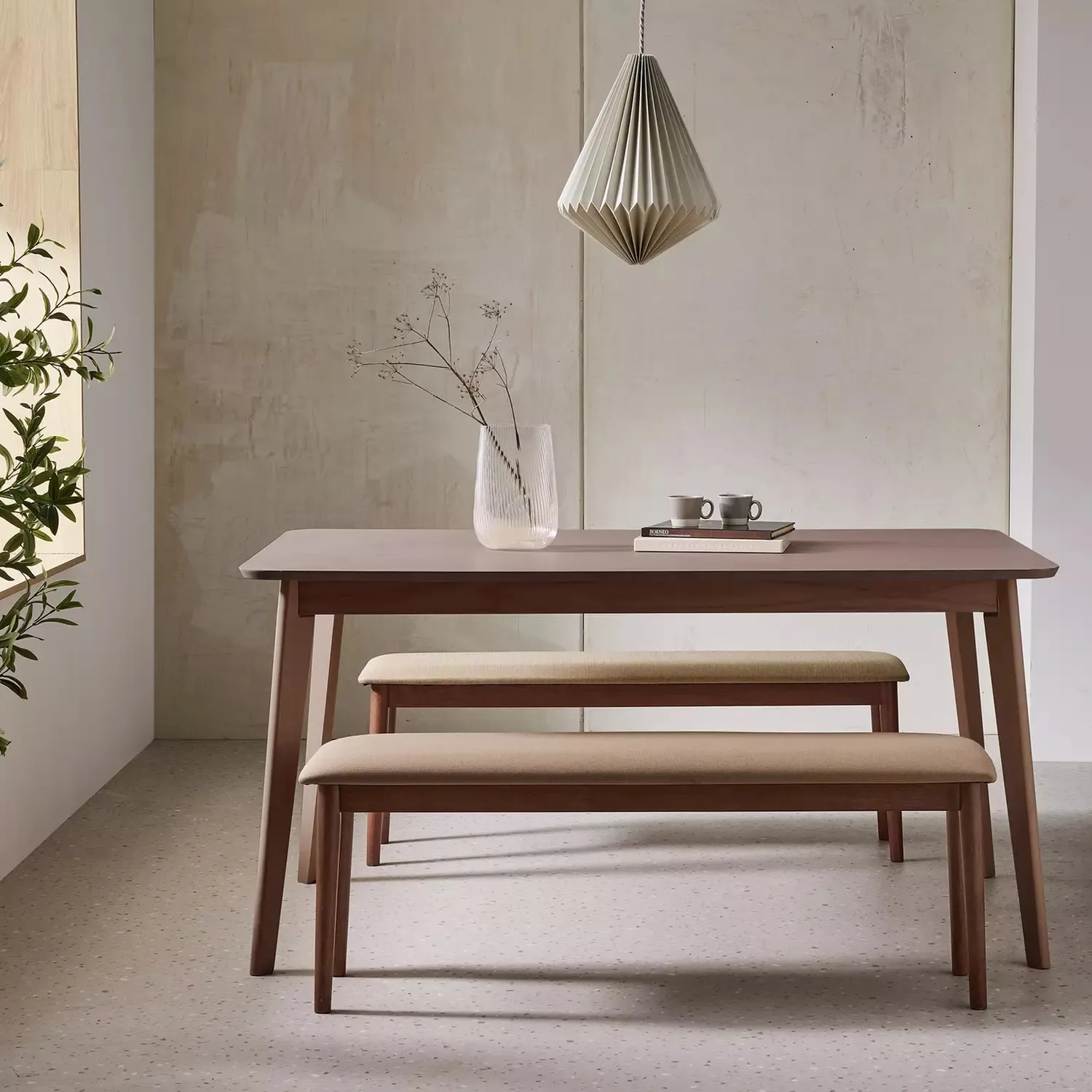
A walnut veneer over an MDF core, on solid birch legs, 150cm and seating six — and an honest piece of furniture at £309 if you take it for what it is. The tapered Scandinavian leg profile is clean, the proportions are right, and the option of matching benches makes it a sensible pick for renters or first flats where the table may not need to last decades. What you are buying is a well-designed veneer table, not solid wood: the top cannot be refinished, and it will not age the way the Murwara will. None of that is a criticism. It is only a problem if the buyer thinks they are getting solid walnut, which at this price they are not.
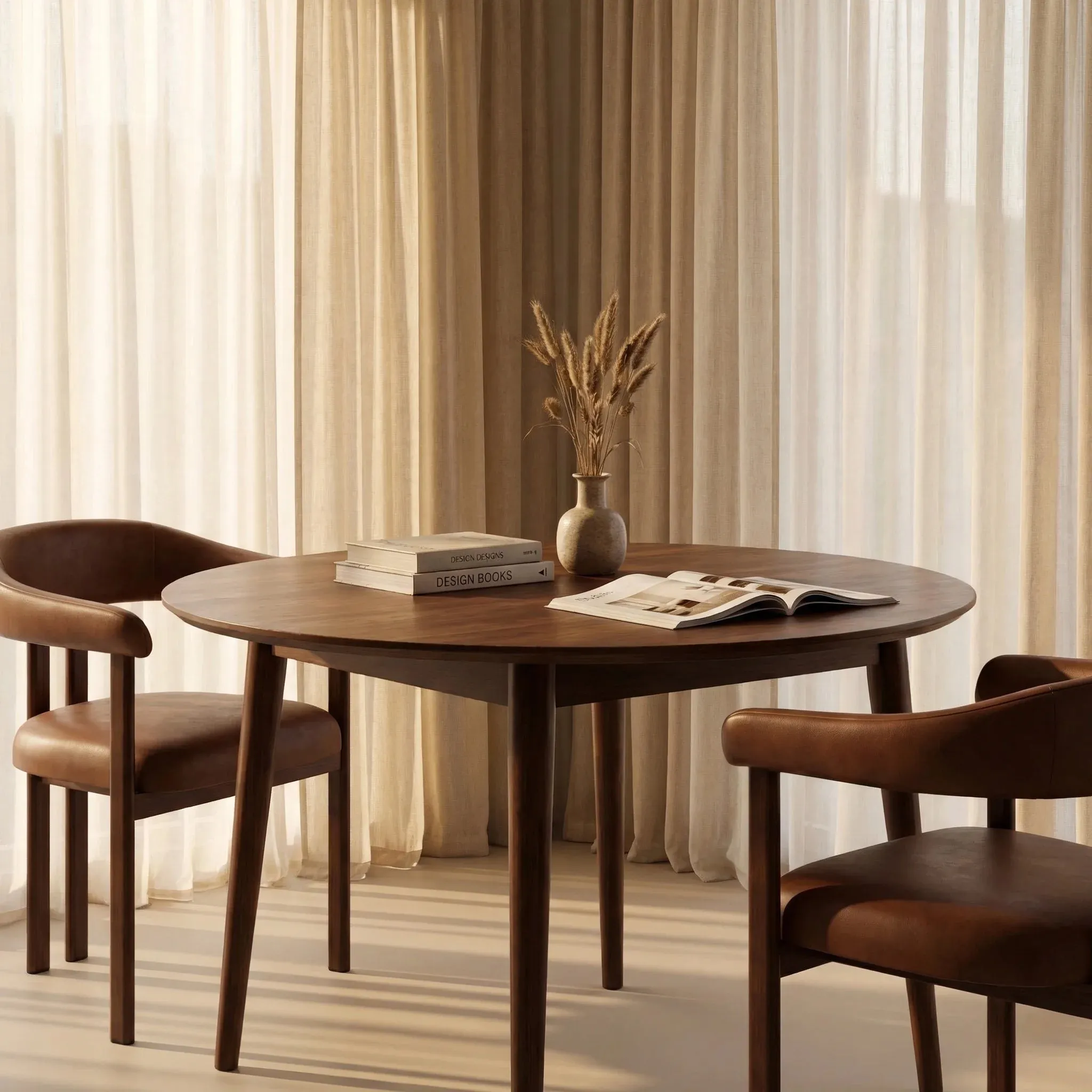
Walnut veneer over engineered wood, on stained rubberwood legs, extending from round to oval — useful in a smaller room where a fixed rectangle would dominate. At £495 it sits at the very top of what veneer can justify, and the extending mechanism is most of what the extra money over the Habitat buys. If you want the same budget spent on a more explicitly mid-century silhouette, Cult’s Landon is the rectangular sibling at the same £495. Both are veneer; choose on shape and room, not on any difference in material.
This is the tier where the word “walnut” earns the closest reading, because it covers solid wood from small makers, dark-stained tables that are not walnut at all, and everything between.
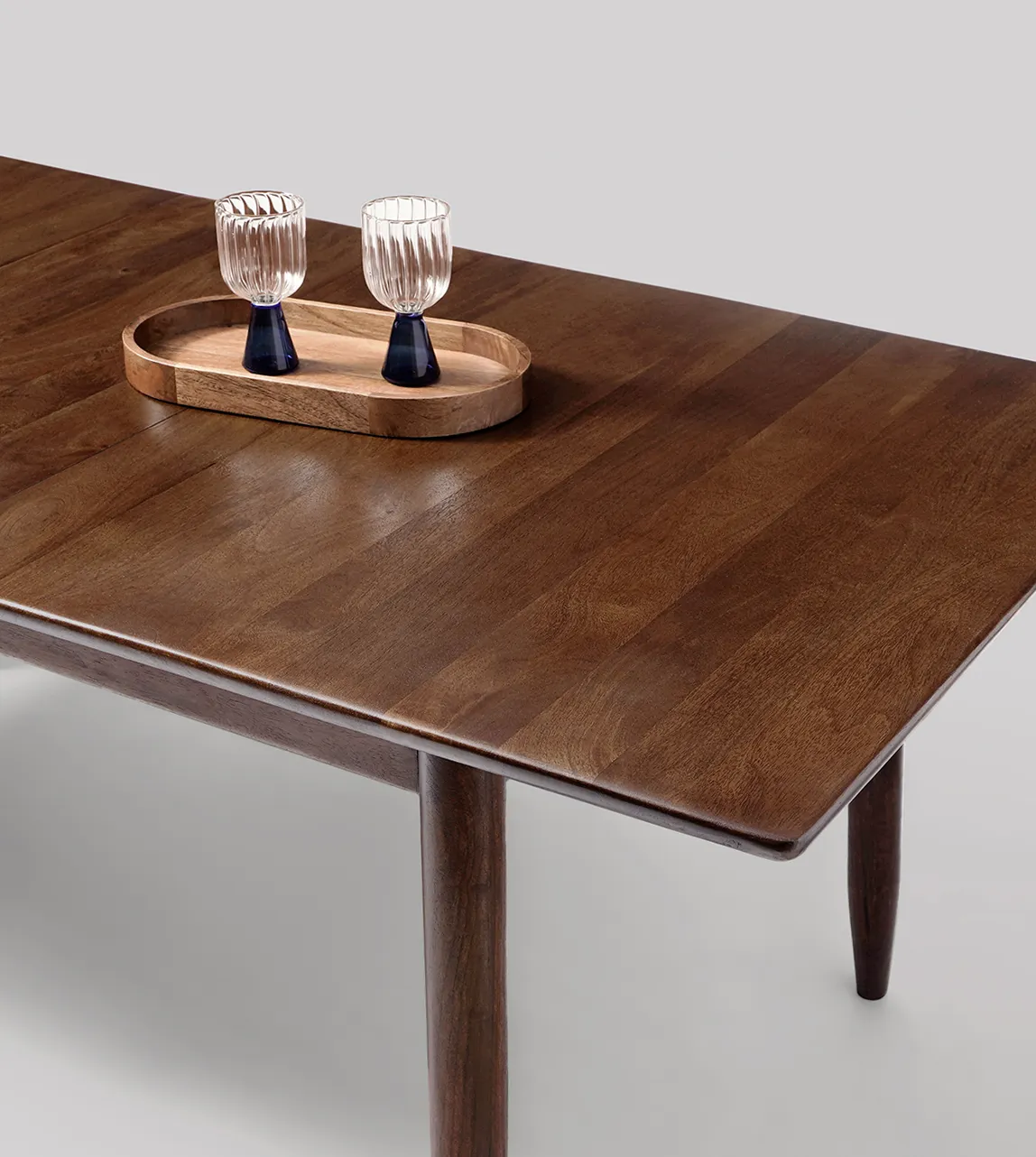
Not walnut — solid acacia, dark-stained close enough to read as it — and worth including precisely because the honest framing matters. At £859 you are getting solid wood with the repairability and weight that implies, in a splayed-leg mid-century profile, for less than a solid walnut table costs. If the colour and the construction matter to you more than the species name, the Maltby is the better value than a same-priced walnut veneer. Buy it knowing it is acacia wearing walnut’s tone, not walnut.
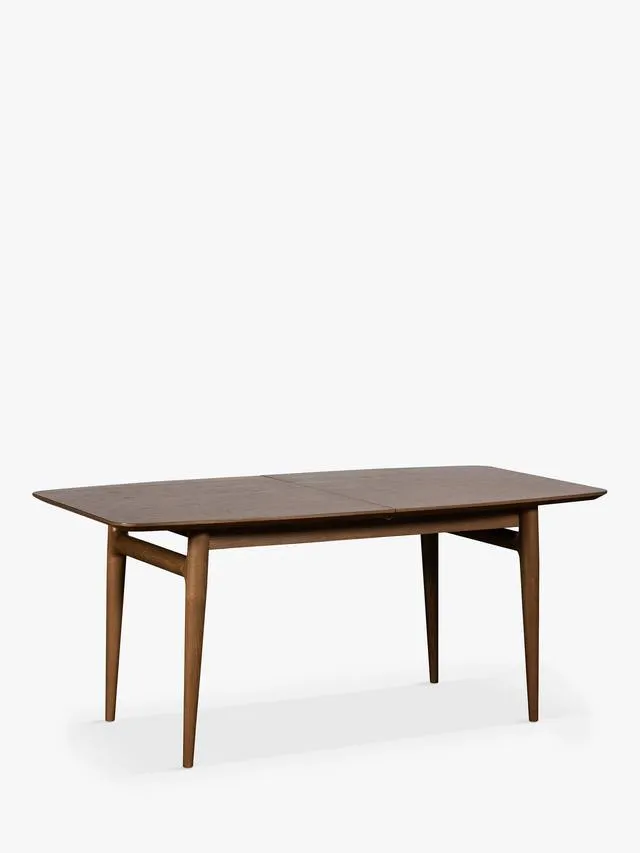
Also not walnut — dark-stained oak — but from G Plan, one of the few British names with a genuine mid-century pedigree rather than a borrowed one. At £1,399 for an eight-seat extending table, it is the option here for a household that actually seats eight and wants real MCM heritage doing the talking. The oak is solid, the lineage is authentic, and the colour lands in the same register as walnut. If your attachment is to the period rather than the specific wood, this is the most honest way to buy into it.
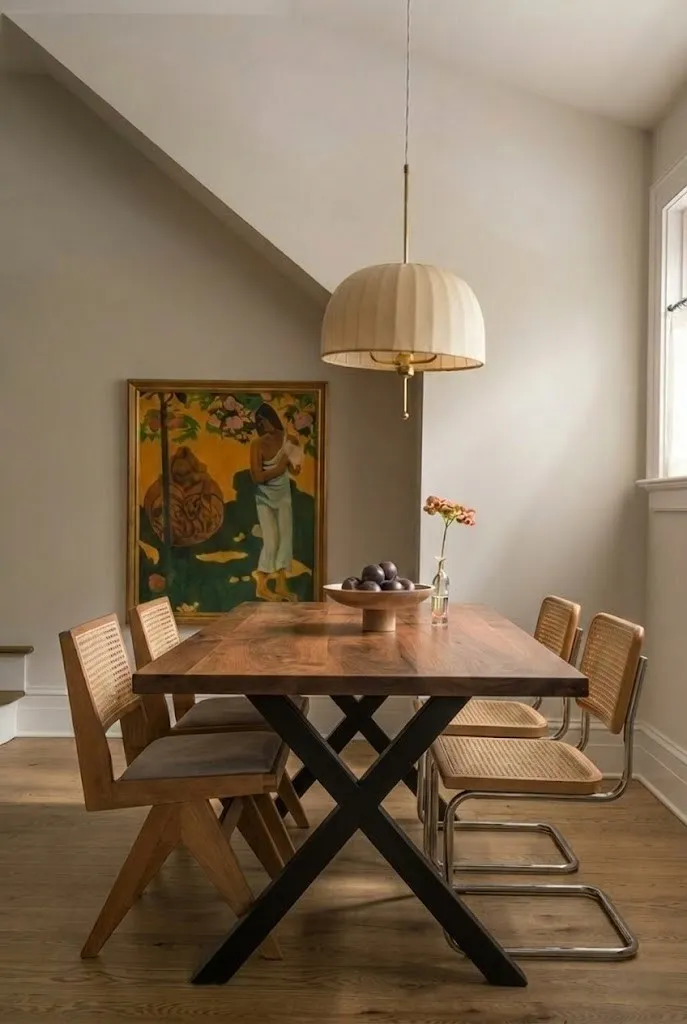
Genuinely solid walnut, from £1,200 — the cheapest actual solid walnut on this list, and the point at which the material truth stops being a compromise. The flavour is more industrial than the rest, which is unsurprising from this maker, so the straight-edge top and heavier base suit a room with some hard materials already in it rather than a soft Scandinavian one. A range of sizes and bespoke options means it can be specified to the space. If the Murwara’s oval is wrong for your room but you still want solid walnut at this end of the budget, this is the alternative.
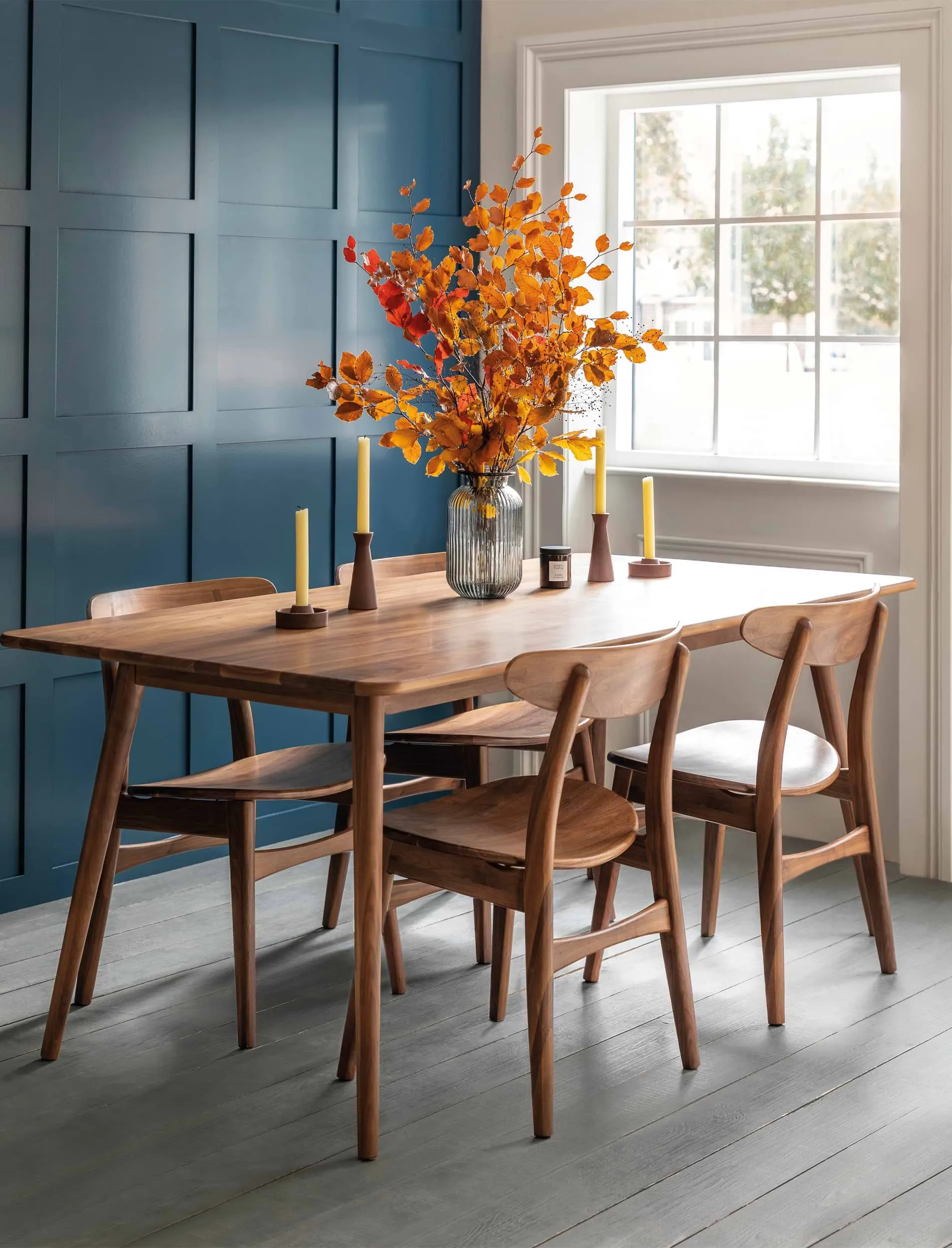
The plainest table here, and that is the compliment it is meant to be. Solid walnut, seating four to six, with nothing in the design competing with the grain — no taper, no signature leg, no detail asking for attention. At £1,500 you are paying for the wood and the joinery and almost nothing else, which is the correct way to buy a walnut table if you accept the argument that the material should do the work. For a reader who wants solid walnut without a design statement attached, the Kersoe is the most direct route to it.
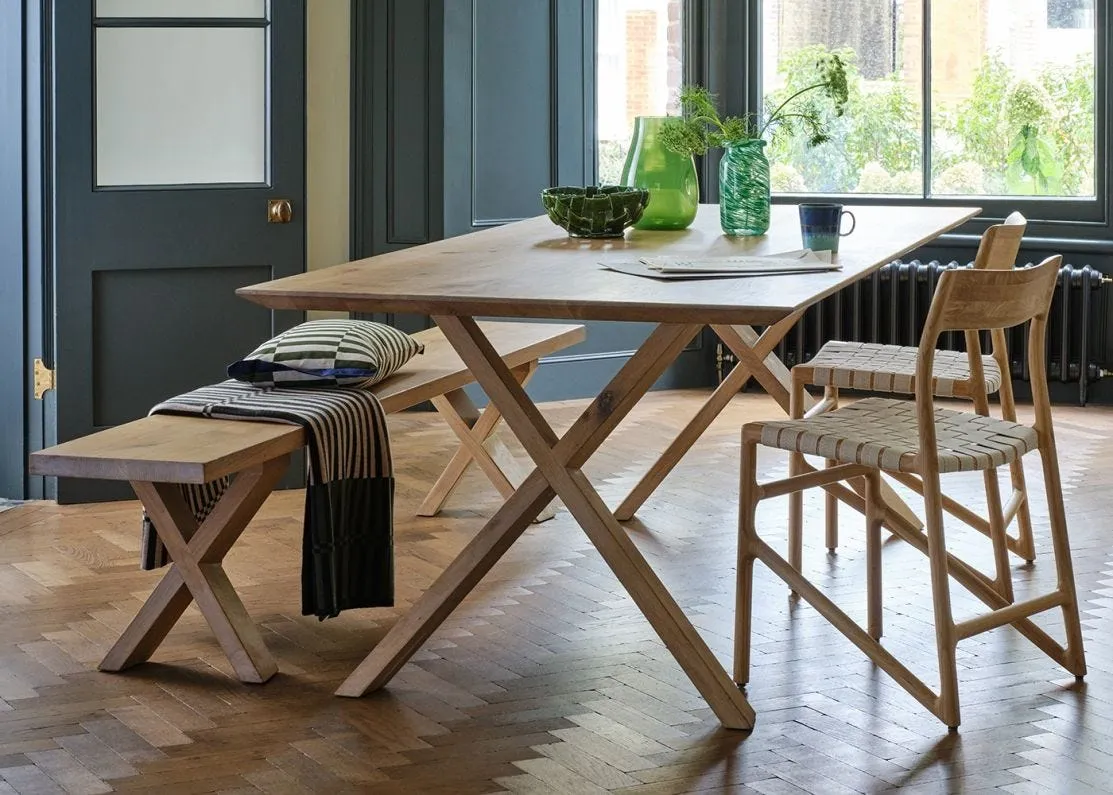
Read this one’s specification closely, because at the £2,199 entry price the Oslo is the solid oak versions. It is solidly built and repairable, and reads lighter and airier despite its relatively chunkier build, suiting a contemporary family room. The actual solid walnut version exists at the top of the range for £2,969. The honest note: if this lighter, airier design is what draws you, one of the oiled-oak versions probably serves it better. Buy the Oslo for its construction and its proportions.
For most readers who can reach it, the La Redoute Murwara at £1,499 is the table to buy: genuinely solid walnut, an oval that works in real rooms, and a surface that will recover from fifteen years of dinners rather than record them. Below £500, the Habitat Skandi is the honest choice — a well-designed table that is not solid wood and will not age like one, which is entirely fine as long as you know that going in. The tables to think hardest about are the ones in between, where a confident product photo can make ash, oak, or veneer look identical to the real thing. The difference is in the spec, and now you know where to read it.
For the history behind walnut’s place in this canon, see What mid-century modernism was actually for; for lighting the room around it, the floor-lamp guide.