Decide £119–£4,425
Eames DSW: Vitra original, licensed replica, or inspired alternative
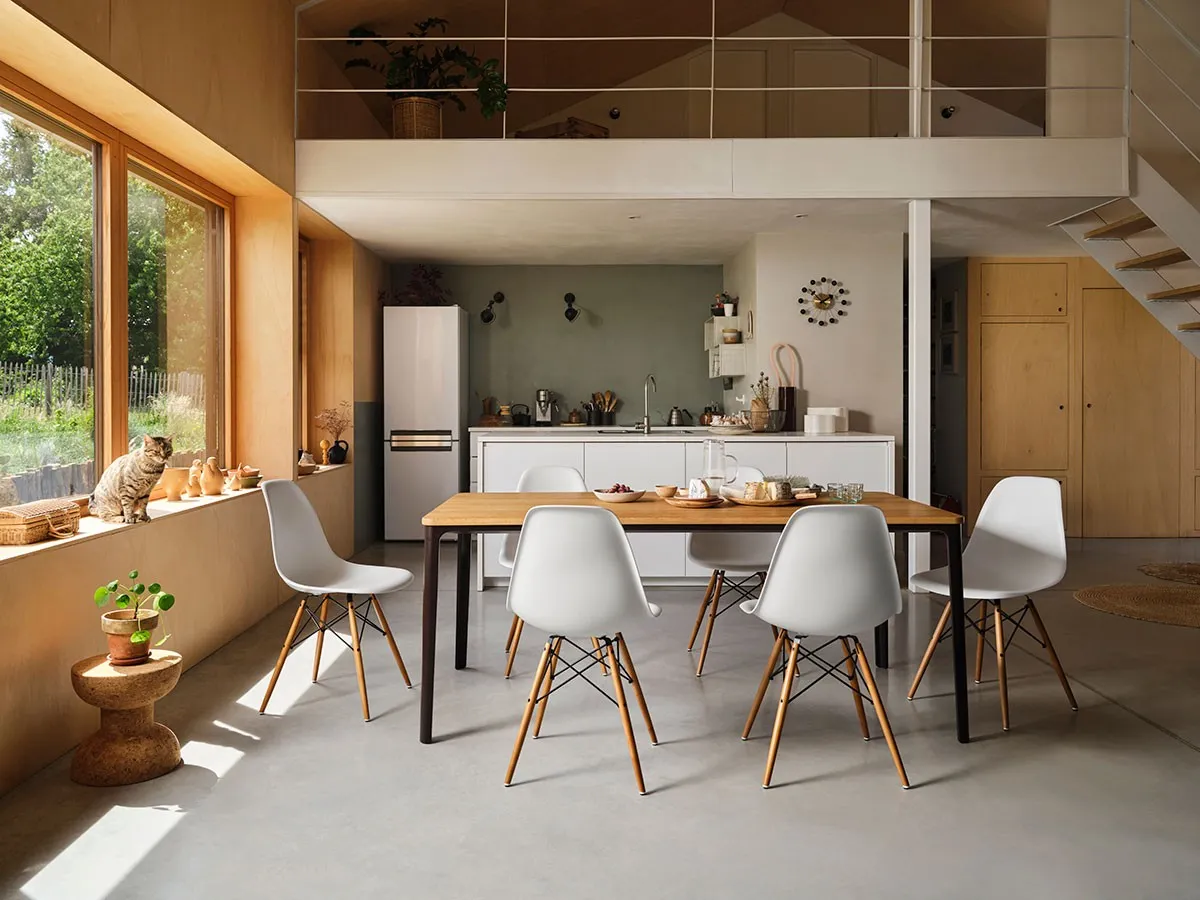
In 1948, the Museum of Modern Art ran an International Competition for Low-Cost Furniture Design. Charles and Ray Eames entered a stamped-metal chair, won a prize, and then abandoned the metal almost immediately — it was too expensive to produce and too cold to sit on. What they reached for instead was fibreglass-reinforced polyester resin, a material the war had just finished perfecting for radar housings and aircraft parts. In 1950 the result went on sale: a single moulded shell, seat and back in one continuous curve, that fitted the human body without the upholstery, springs, and joinery every previous chair had required. It was the first mass-produced plastic chair in history, and the entire point of it was that it should not cost very much.
The Dining Side chair on a Wood dowel base — DSW, the version with the splayed birch legs and the black metal struts — is that shell at its most domestic. Herman Miller built it in America; Vitra took the European licence. Seventy-five years later it is one of the most recognised silhouettes in twentieth-century design, and also one of the most copied objects on earth. Which produces the question this piece exists to answer: when the chair was conceived as an exercise in cheapness, what exactly are you buying when you pay £450 for the licensed one — and is the £119 lookalike a betrayal of the design, or the closest thing to what the Eameses actually wanted?
Yes, the DSW is still copyrighted
It is tempting to assume that a design from 1950 is long out of copyright and fair game. It is not. Until 2016, the UK treated industrially manufactured designs generously: copyright on a mass-produced “artistic work” expired 25 years after it went on sale, after which anyone could legally make and sell a copy. This is why, for decades, British shops could fill their windows with exact Eames, Le Corbusier, and Jacobsen reproductions and call them by the designers’ names.
That ended on 28 July 2016, when the repeal of Section 52 of the Copyright, Designs and Patents Act 1988 came into force. Industrially produced design classics now carry the same protection as any other artistic work: the life of the designer plus 70 years. Charles Eames died in 1978; Ray Eames in 1988. The DSW is therefore protected in the UK until 2058, and comparable terms apply across the EU and the US.
The practical effect is visible in how the chairs are now sold. A licensed DSW carries the Eames name because Vitra pays for the right to use it. Everything else has had to change its language. The chairs that once advertised themselves as “Eames reproductions” are now “Eames-style” or “inspired by” — a legal distinction that, as we will see, tracks a real difference in the object, not just the marketing.
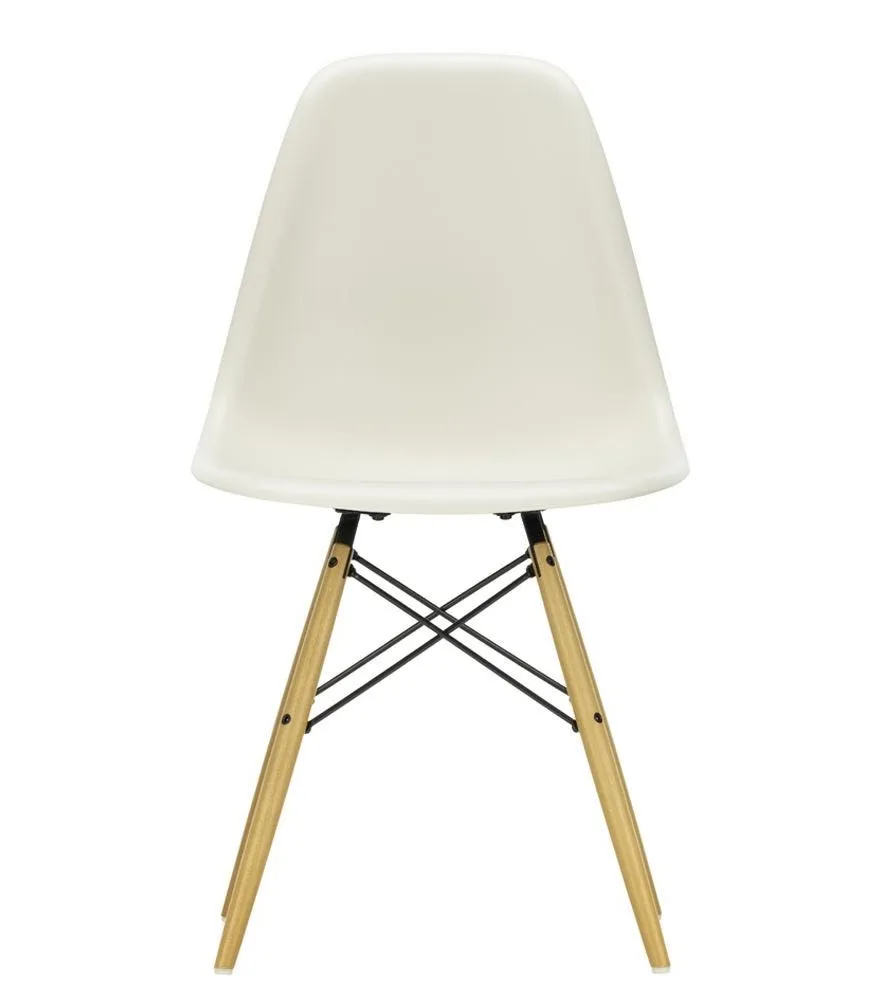
This is the licensed Vitra DSW in moulded polypropylene rather than fibreglass, and for most people buying most rooms it is the right chair. You get the shell at the dimensions Charles and Ray signed off, the proper maple base, the Vitra manufacturing standard, and the legal right to call the thing what it is. At £450 it is not cheap, and the publication will not pretend otherwise. But it is the cheapest way to own the actual design rather than an approximation of it, and a single one — beside a desk, at the head of a table, alone in a corner doing the work a good object does — is straightforwardly worth the money.
The arithmetic only turns against it when you need more than one. The D in DSW stands for dining, and a dining table wants four chairs, or six. At £450 each, that is £1,800 to £2,700 — the point at which the chair’s own founding argument, that good design should be within reach, starts to strain against its price tag. That tension is the whole of this guide, and it is worth holding in mind as the numbers climb.
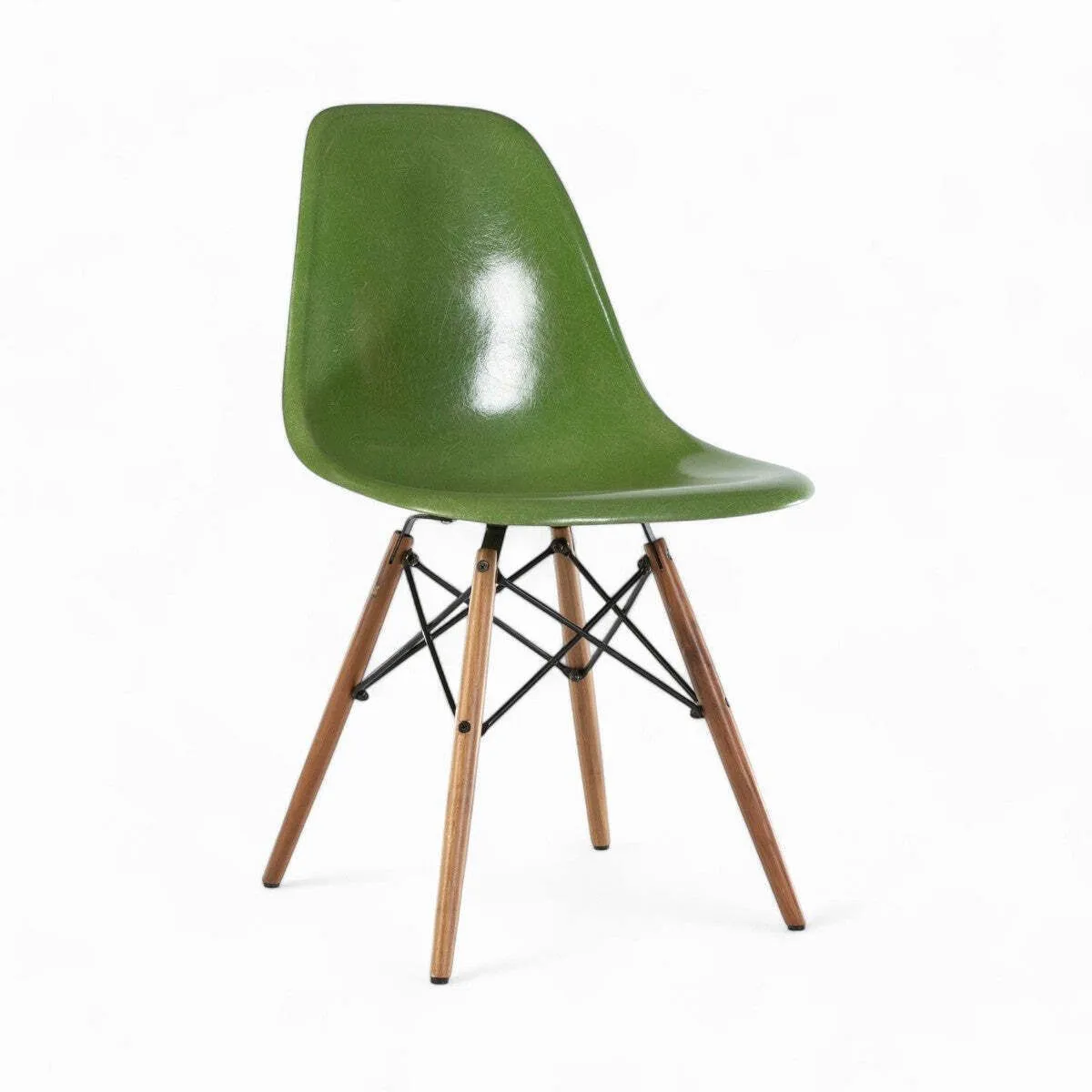
The vintage market is where the chair stops being furniture and becomes a collectible, with prices to match. The lime-green original linked above is £4,425 — a figure that has nothing to do with how it functions as a seat and everything to do with the rarity of that particular colour in original Herman Miller fibreglass. This is a chair for the collector, by which one means the obsessive, and there is no shame in being one; it is simply a different purchase from the one most readers are making.
There is, however, a genuine bargain hidden in this tier for the patient. Single originals in ordinary colourways turn up in the low hundreds, and matched sets of four sell for roughly £1,000 to £2,500. If you can find a colourway that suits the room, a vintage set can cost less per chair than new Vitra and carry sixty years of provenance the new one cannot. The catch is supply: you buy what exists, in the colour it exists in, when it exists. This is a route for people who enjoy the hunt, not those who need four chairs by Friday.
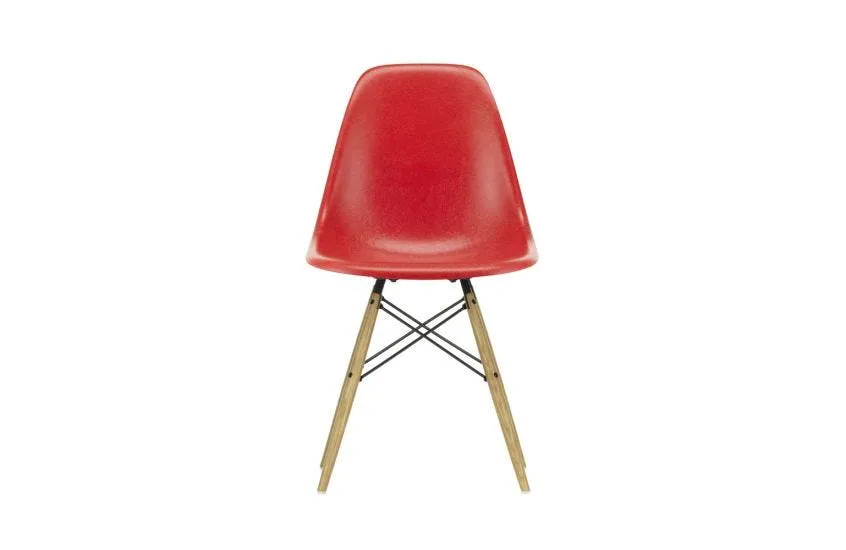
Vitra reintroduced the fibreglass shell to reproduce the chair in its original material, and this is what the £500 premium over the standard DSW buys: not a better chair to sit in, but a more faithful one. Fibreglass has a faint translucency and a slightly granular surface that the smooth polypropylene lacks — the difference is real and visible up close, and invisible from across a room. At £950 it is for the reader who knows precisely why the material matters to them. If you cannot articulate that reason, the £450 version is the same shape for less than half the money, and the honest recommendation is to buy it instead.
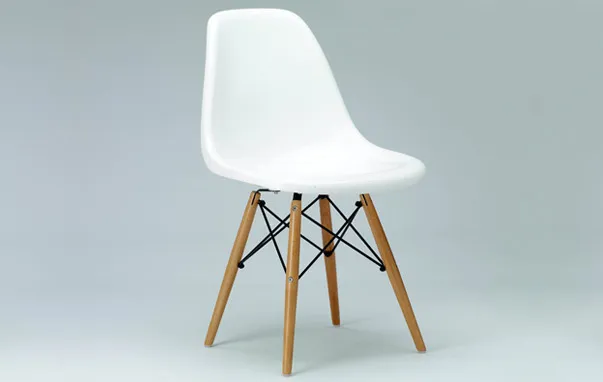
“Eames-style” is doing legal work in that name, but the chair behind it is a careful piece of homage. It mirrors the original’s dimensions closely without copying them exactly — a difference most people will never detect in use, and the kind of difference the post-2016 law now requires. At £225 it is half the price of the licensed Vitra, which means a table of four for £900 rather than £1,800. For a household furnishing a real dining room on a real budget, this is the point where the maths starts to work. You are buying the proportions and the silhouette, knowingly, without the name or the manufacturing pedigree — and being honest with yourself about which of those things you were ever paying for.
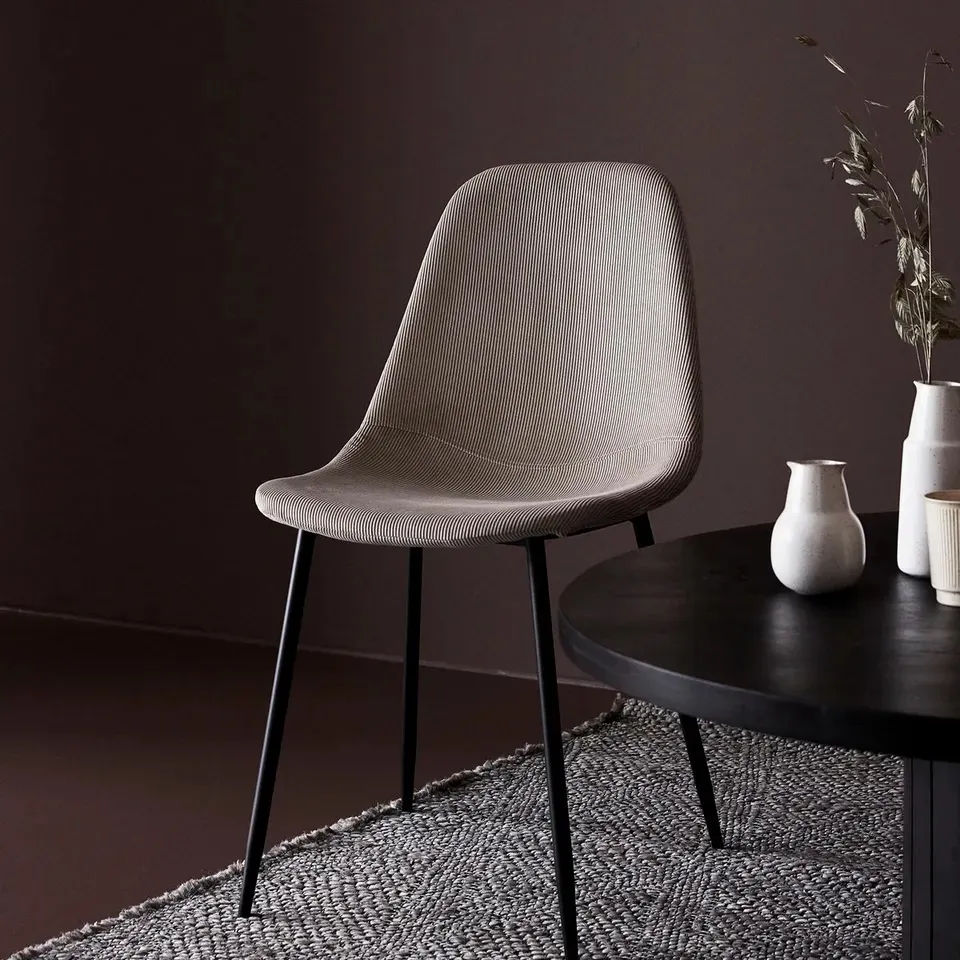
The most affordable chair here, and the least Eames-like — which is precisely why it earns its place. House Doctor’s Found chair is the DSW refracted through Scandinavian design: the moulded shell is still there in outline, but the Eiffel-tower strut base has been swapped for something plainer, and the seat wears a corduroy cover that the Eameses never imagined. It does not pretend to be the original. It takes the idea — a single comfortable shell, cheaply and honestly made — and answers it in a different accent. At £119 it is the chair on this list that most fully honours what the DSW was for, even as it looks least like it.
The Eameses spent the late 1940s trying to get the price of a good chair down, not up. They reached for fibreglass because it was cheap, licensed mass production because it scaled, and entered a competition whose entire premise was low cost. The £4,425 collector’s piece is the chair at its furthest remove from that intention; the £119 Scandinavian cousin, oddly, is the closest to it.
For a single chair, or if the budget genuinely stretches, the £450 Vitra is hard to argue against — you own a piece of design history, made properly, called by its right name. But the moment you are furnishing an actual table, the per-seat cost of the licensed original begins to trend toward eye-watering, and the inspired alternatives stop looking like compromises and start looking like the point. You can buy down-market and still keep faith with the design. That was always the idea.
For more on the thinking behind these objects, see What mid-century modernism was actually for.