Decide £59–£400
The best floor lamps under £400: ten options that earn their place
In 1962, Achille and Pier Giacomo Castiglioni presented the Arco lamp to the world: a single arc of stainless steel sweeping nearly two metres out from a 65-kilogram base of Carrara marble, throwing light exactly where a pendant could not reach without drilling into the ceiling above it. It solved a specific problem with uncommon elegance, and it still costs £2,343 from Heal’s today. The Object study we published on the Arco asks whether that price is worth paying. This piece asks a different question: what do you buy when the answer is no?
Floor lamps are one of the more consequential decisions in a room and one of the least seriously treated. Most interior guides lump them alongside scatter cushions as finishing touches — aesthetic punctuation after the real work is done. This underestimates what a well-placed floor lamp actually does. Layered lighting — a lower source working against or alongside the ceiling — changes how a room reads at eye level. It pulls corners forward, warms surfaces that overhead light flattens, and gives a room a sense of being inhabited rather than illuminated. The architects and designers whose aesthetic vocabulary this publication draws on understood this: Scandinavian domestic design built entire moods around the absence of overhead light; the wabi-sabi interior achieves its quality of imperfect warmth partly through the selective pooling of incandescent light rather than its even distribution.
The lamps in this guide are not the originals. Some nod explicitly to famous predecessors; some belong to distinct contemporary lineages of their own. What they share is a reason for looking the way they do — a material logic or design inheritance that makes them more interesting than a generic cylinder on a stick. They range from £59 to £400, and the price differences, as you will see, are real but not always decisive.
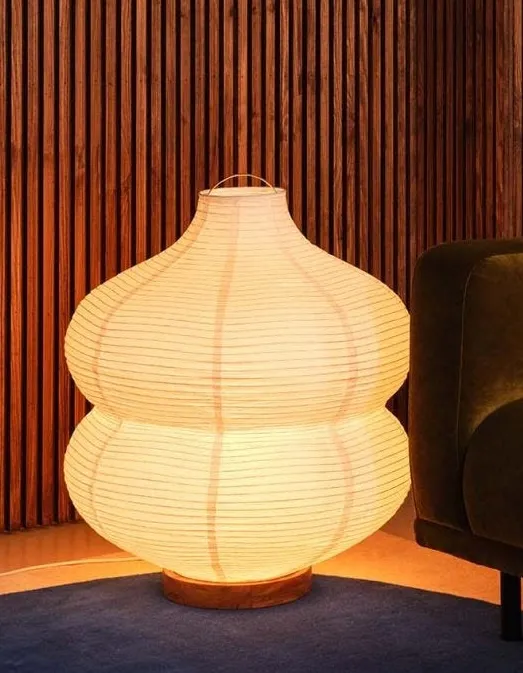
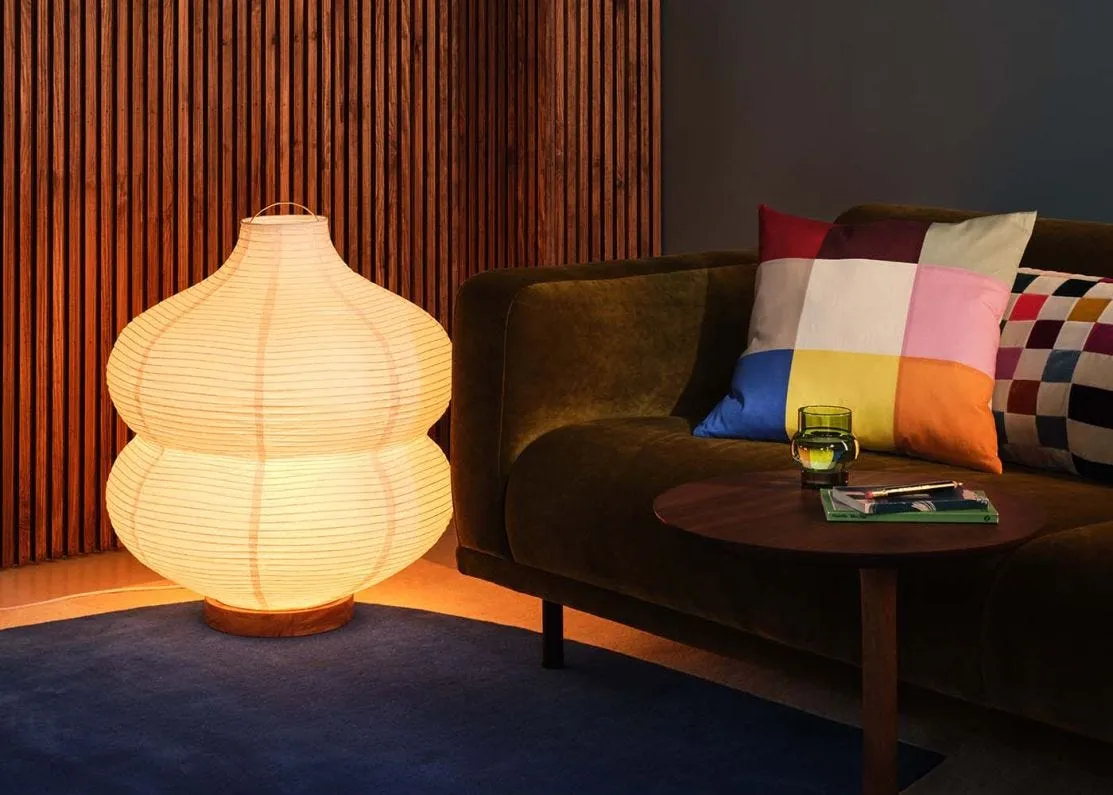
The Carta lamp is oversized by design. Its globe — a billowing sphere of layered rice paper — deliberately recalls the Japanese chōchin, the collapsible lantern that has been part of domestic interiors since the Edo period. It is a conscious act of reference, not decoration: Isamu Noguchi made the same gesture with his Akari light sculptures in the 1950s, arguing that the softened, diffused light of paper lanterns was not merely aesthetically pleasing but physiologically calmer than the hard shadows cast by opaque shades. At £189 from Heal’s, the Carta is not trading on that heritage disingenuously — it earns its lineage. The rice paper diffuses warm light evenly across a wide area, the slender stem keeps the visual weight exactly where the globe demands it, and the whole thing folds flat for storage. It will not suit every room. Homes that run cold and angular — concrete floors, steel details — may find it too yielding. For everything else, it is the most considered object at this price point.
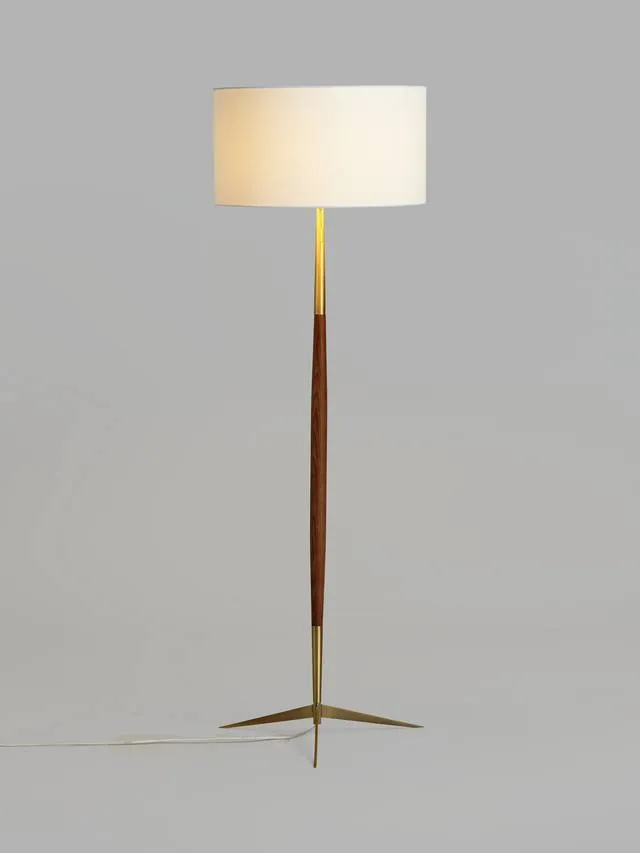
So thoroughly mid-century modern in its vocabulary that it would be entirely at home in the corner of the Sterling Cooper conference room. The turned wood spindle, the brass hardware, the drum shade: each element is pulling from the same well that gave us the Eames lounge chair and the credenza as aspirational object. John Lewis offers matching table and ceiling versions, and the temptation to kit out an entire room with them is worth resisting — one lamp making the reference is considered; three is a theme park. At £250, the material quality is solid without being remarkable. You are paying for a coherent design statement, not exceptional craftsmanship, and that is a reasonable exchange.
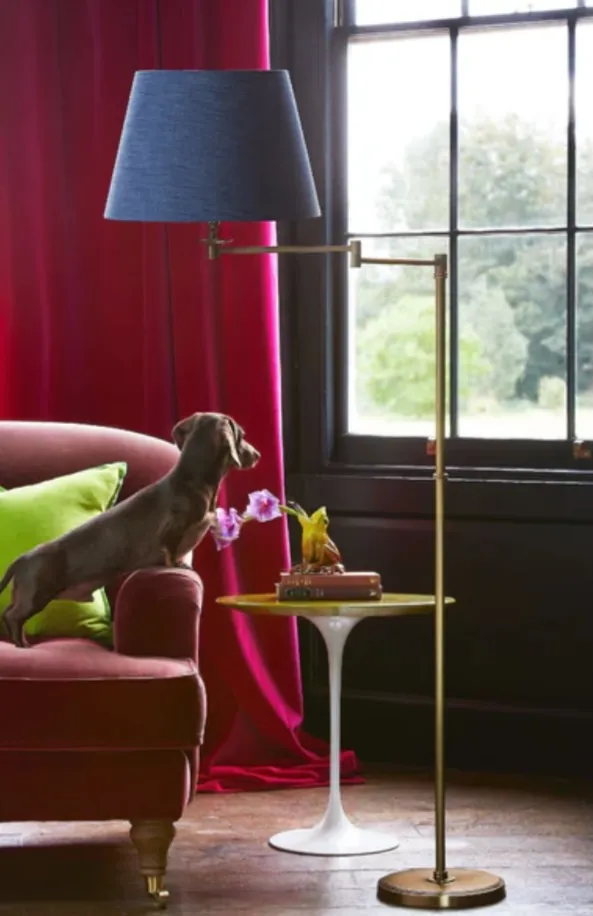
The most functional lamp in this guide, and the one most interested in being a tool rather than a sculpture. The articulated brass arm moves — genuinely, usefully moves — which makes it as at home beside a reading chair as it is standing in an alcove. Pooky recommends pairing it with one of their drum or straight empire shades, and this is sound advice: the combination of the moving brass arm with a clean, unfussy shade gives the lamp a workspace intelligence that suits the more austere end of mid-century taste. At £370 it sits near the top of this tier, but the articulation is real hardware, not decorative detail, and the brass has the weight that cheaper alternatives tend to fake.
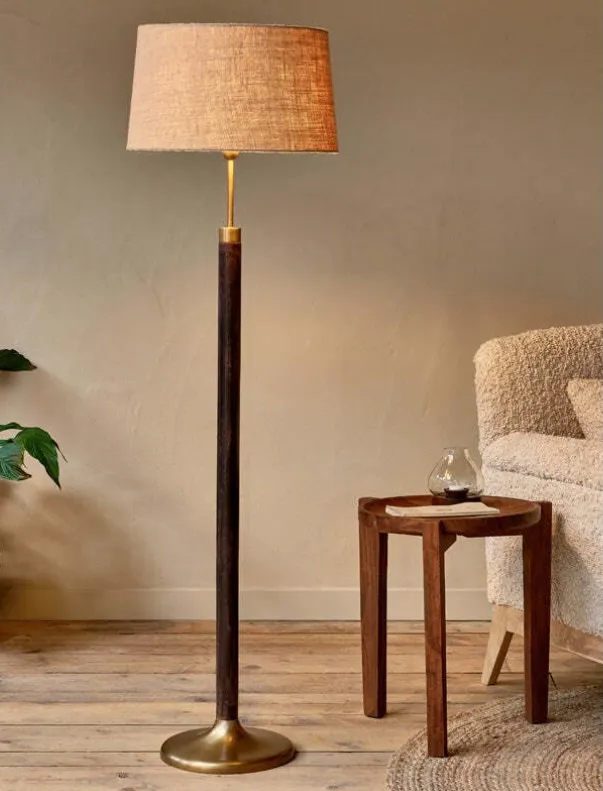
Nkuku’s range generally trends toward the rustic and globally eclectic, which makes the Digha something of an outlier in their catalogue — it leans decidedly more mid-century than their usual offering. The cigar-dark stain on the wood and the antique brass fittings give it a quiet, understated quality that rewards the detail rather than announcing itself across the room. Worth pairing with Nkuku’s own Dia Jute Lampshade for a combination that keeps warmth at the centre without tipping into the merely decorative. At £350, it occupies a similar position to the Pooky: near the ceiling of this price tier, justified by material and finish quality rather than design heritage.
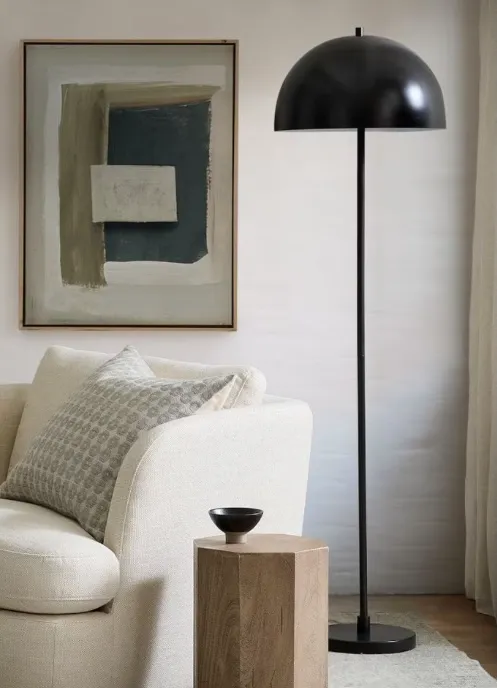
West Elm has built an entire business on making mid-century modern accessible, sometimes almost too on the nose about it. The Niall is a case in point: its mushroom-shaped shade carries obvious debts to Verner Panton’s Flowerpot lamp (available at Heal’s at £580, if the comparison is useful), but where the Flowerpot is playful — almost Pop Art in its primary-colour cheerfulness — the Niall is considerably more austere. Some of the fun has been traded for sobriety, and whether that is a good exchange depends on what the room needs. For spaces that want the reference without the exuberance, it works well at £279.
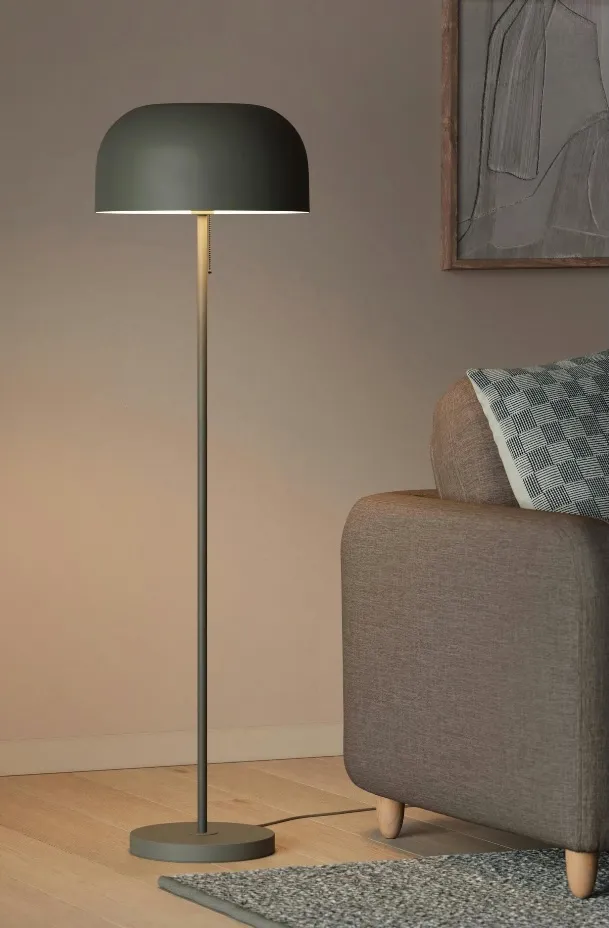
The Oslo is a North American option — Article ships to the UK, and the landing price in sterling is around £188 at current rates — and it is the most quietly contemporary lamp in this guide. Where the Spindle wears its mid-century heritage with something approaching pride, the Oslo wears it lightly: the proportions and restraint are present, but the surface language is more of the moment. It comes in five colours. Lichen — a muted, greyish sage — is the right call for a room that wants something cooly understated; Oxblood for those with less reticent instincts. Either works. At under £200 it sits at the boundary between the two tiers, and it is the best option here for readers building interiors around contemporary rather than period mid-century.
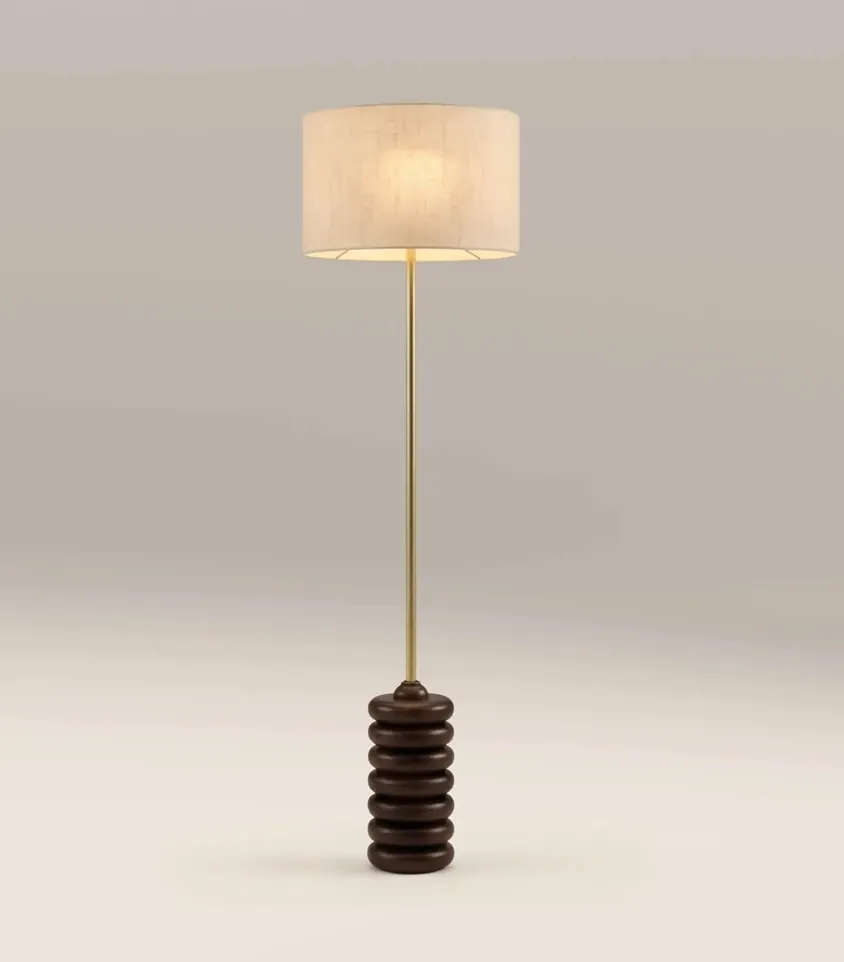
Chunky in a way that reads as deliberate rather than clumsy, the Elodie brings to mind the insulating rings on high-voltage power infrastructure — an industrial reference that the walnut base and natural linen shade immediately domesticate and warm. The contrast between the lamp’s slightly industrial silhouette and its warm materials is what makes it interesting; either element alone would be less. At £129 the construction is lighter than the lamps in the tier above, but the design logic is there and the combination of walnut and linen is not something you find at this price point in most catalogues.
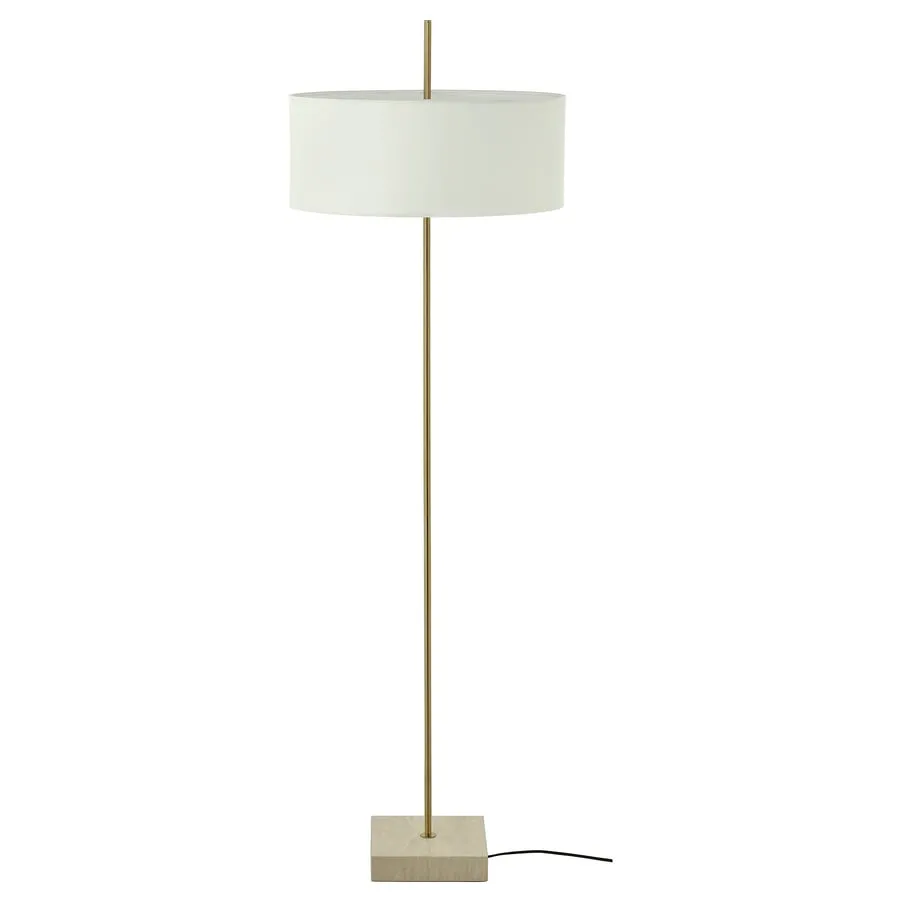
The most surprising entry on this list. IKEA’s Stockholm range is the company working at its most considered rather than its most efficient, and the 2025 floor lamp — brass stem, travertine stone base — achieves a quality of Nordic mid-century restraint that costs significantly more when it comes from anywhere else. The travertine is real stone, not a finish; the brass is properly brass-coloured rather than the yellowed approximation common at this price. At £99 it is, on the evidence of these materials and proportions, the best value in this guide. The caveat is that IKEA stock moves unpredictably, and the Stockholm range appears and disappears without warning. If it is available when you are reading this, it is worth serious consideration.
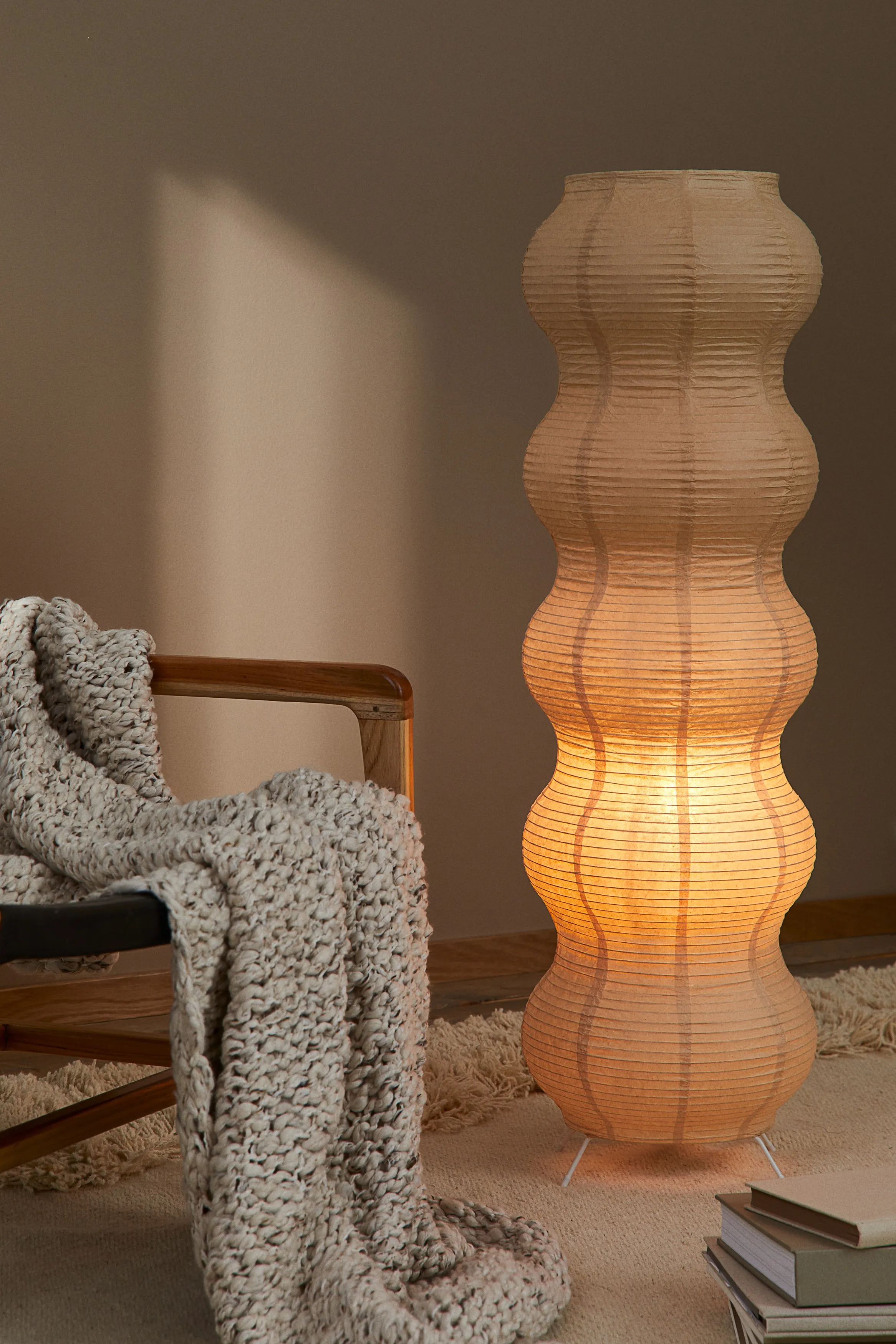
Cheaper than the Carta by £130, and it shows — but not catastrophically. The rice paper is thinner, the stem less considered, the overall impression slightly more provisional. It is, however, just this side of the line between student-house and considered-home, which is a meaningful achievement at £59.99. For a room in transition — a rented flat where the intention is serious but the budget is not yet — it holds its end of the bargain. When the budget allows, the Carta is what replaces it.
The promise of mid-century modernism — that well-designed objects could be made available at non-ruinous prices through the honest deployment of industrial production — was not merely idealism. It was a design argument, and it was largely right. The Arco at £2,343 is the benchmark against which every arc lamp since has been measured, and rightly so; it solved its problem so completely that the solution became the aesthetic. But the Castiglioni brothers were not arguing for exclusivity. They were arguing for the object having a reason. At £59.99 or at £370, that argument is still available. It just requires a little more searching.