Decide £80–£600
Pendant lights for a considered kitchen: eight options from £80 to £600
Search “kitchen island” and you will get the same photograph a thousand times over: three matched metal domes hung in a dead-straight row above a stone worktop, evenly spaced, identical, lined up like streetlights. It is the default picture of a considered kitchen, and it is not a design decision. It is a Pinterest convention — a shape that photographs well and copies easily — and copying it is how most kitchens end up lit like most kitchens.
This is a guide to the alternative, and it starts from the one question: what is the light actually for? Eight pendants from £80 to £600, and the argument that the shade material decides more than the fitting it hangs from. (For the standing-lamp version of the same question, there is the floor-lamp guide; this is its ceiling-mounted sibling.)
The one decision that matters: material, not fitting
Over an island you stand at — as opposed to a table you sit at — the shade decides what kind of light reaches the worktop, and there are four honest materials to choose between.
Clear glass gives you sparkle and a visible bulb. The filament shows, the light is bright and a little hard, and the fitting reads as an object even when it is switched off. It is decorative first and task-capable second, and it wants a good-looking bulb because you will see it.
Opal glass — white, diffusing — hides the bulb and spreads the light softly and evenly. This is the engineered answer to glare: no hot spot, no hard shadow, an even wash. It is what you want over a table where people face one another, and mostly wasted over a chopping board, where you actually want the light concentrated.
Metal throws a directional pool straight down. An opaque shade shields the bulb and pushes the whole output onto the surface beneath it, which is exactly what task lighting over a worktop is for. The trade is that it does little for the rest of the room; a metal pendant lights the counter and leaves the walls dark.
Natural fibre — wicker, rattan, woven grass — diffuses softly and throws a patterned shadow across the ceiling and walls. It is the most ambient of the four and the least useful for task, and it belongs where atmosphere matters more than seeing what you are chopping.
The distinction underneath all four is task versus ambient: light aimed at a surface so you can work at it, or light spread around a room so the room feels inhabited. Decide which job the pendant is doing before you look at a single price, because it removes half of the list below at a stroke.
Island or no island: how many, and how high
A single pendant suits a round table or a compact island; a matched pair or a row of three suits a long island or a run of worktop, spaced evenly along the length rather than crowded at the centre. Even numbers hang over the object symmetrically; odd numbers want a central axis to line up on.
The rule most often broken is height. Hang the bottom of the pendant roughly 70 to 90cm above the surface it lights — which, over a standard worktop, puts it about 150 to 160cm off the floor. Too high and the light spreads thin and stops being task lighting; too low and it blocks the sightline across the room and puts the bulb in your eyeline when you sit. Two further specifics matter more than the fitting itself: use a 2,700K bulb, the number printed on the box, not the bluish 4,000K that turns a kitchen clinical; and put the pendants on a dimmer, so the same fitting can do bright task work at breakfast and a low level after dark.
The options, £80 to £600
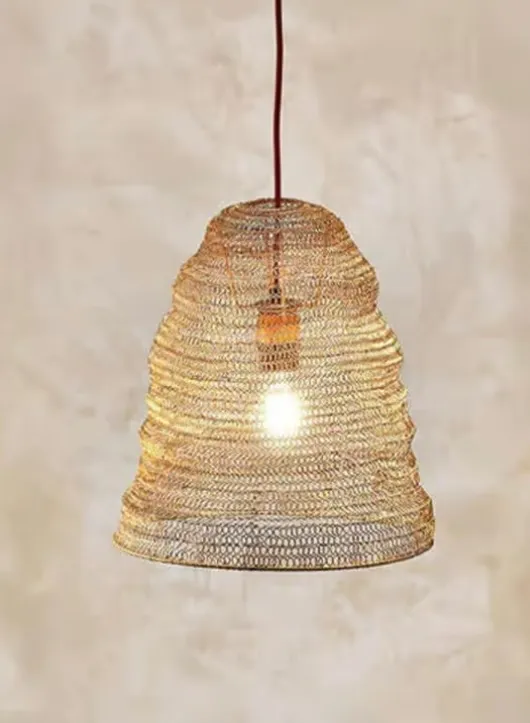
The literal floor of the range, and it is important to be clear what £80 buys: a shade, not a finished pendant. The Jatani is an open antique-brass wire cage, which means it barely shades at all — the bulb shows through and throws a cage-shadow onto the ceiling, decorative rather than functional. Budget for the parts it does not include: a ceiling fitting such as Nkuku’s Otti at around £60, plus a bulb you are happy to see. Bought with eyes open it is an honest entry point; bought expecting a complete, task-capable pendant it will disappoint. This is the caveat the price hides.
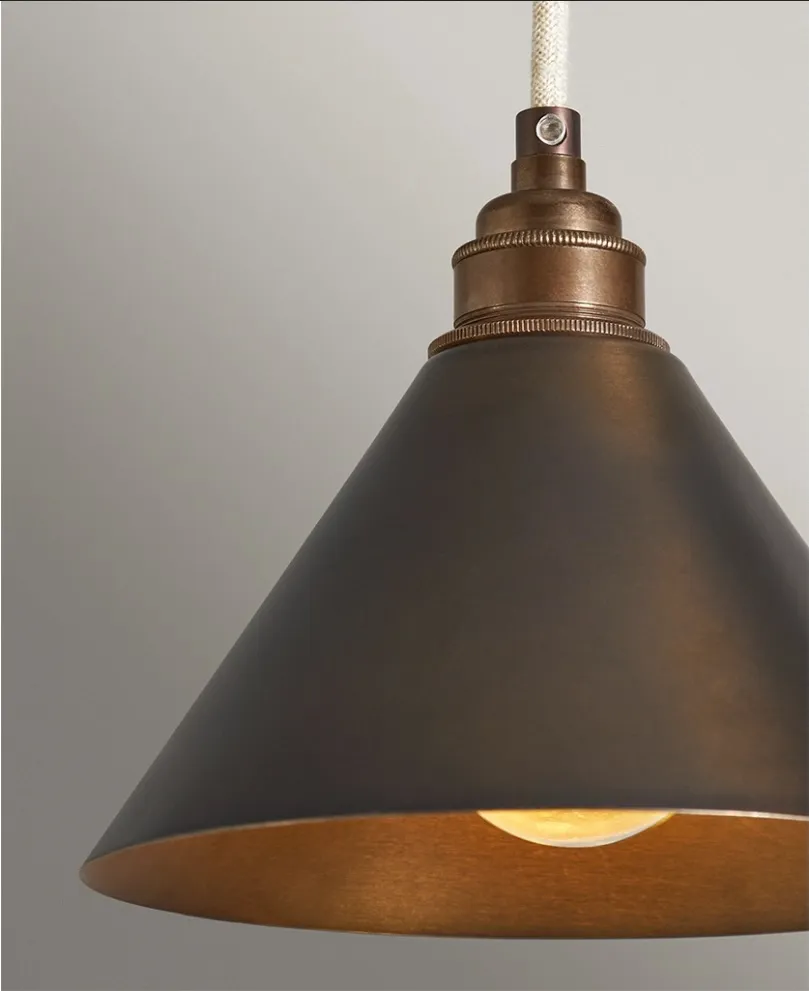
The practical over-island workhorse. A plain metal cone in antique brass, it does the one thing decorative glass cannot: it throws a directional pool of light straight down onto the worktop, which is what task lighting over an island actually requires. It is made to buy in a matched pair or a row of three, evenly spaced, and that is the correct way to light a long island for work. If you need a light that is doing a job rather than setting a mood, buy two of these and stop reading.
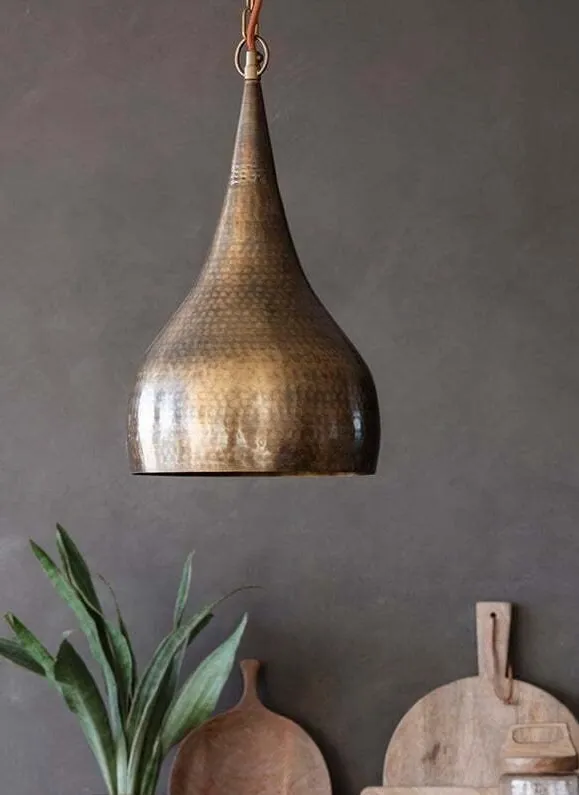
A complete fitting rather than a shade, and the first pick where the material does real aesthetic work. The Quinn is a hammered antique-brass dome; the dome directs light downward, but the hammering breaks up the reflection so the pool it casts is warmer and less flat than a smooth shade gives. At £185 you are paying for a finished pendant you hang and switch on, and for a surface that scatters the light rather than bouncing it back hard. It is the sensible middle of the metal options: more considered than the Dowsing & Reynolds cone, still genuinely directional.
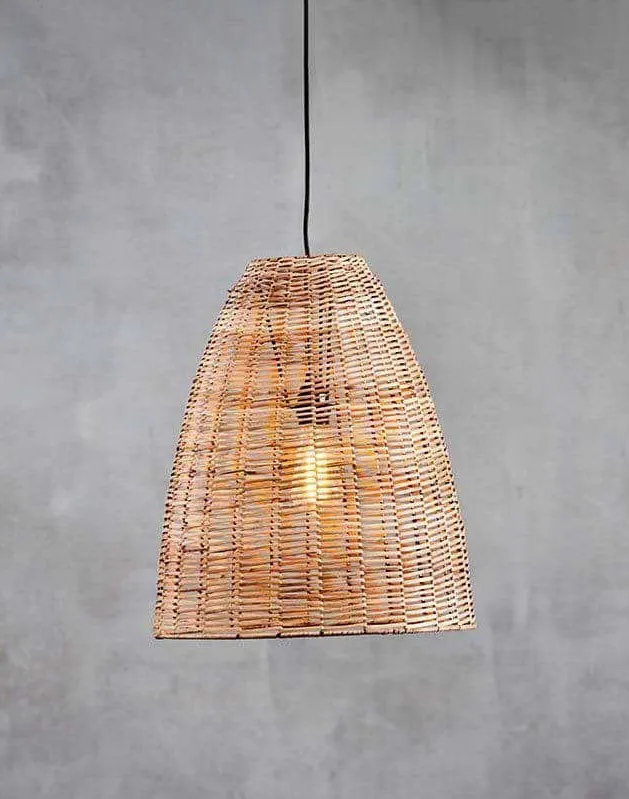
Natural fibre, and a clear case that the lighting needs to match functionality of the room it is placed in. The Noko is a woven wicker cone: diffuse, textural, and it throws a patterned shadow across the ceiling that is genuinely worth having. Over a chopping board it is the wrong tool, because it scatters the light everywhere except concentrated on the surface. Put it over a corner armchair or a dining table where mood beats task, and it earns its £185; put it over an island and you will be squinting. It belongs to the same natural-fibre argument as the wool-over-jute case in the rugs guide — the material has to match how the room is used, not just how it photographs.
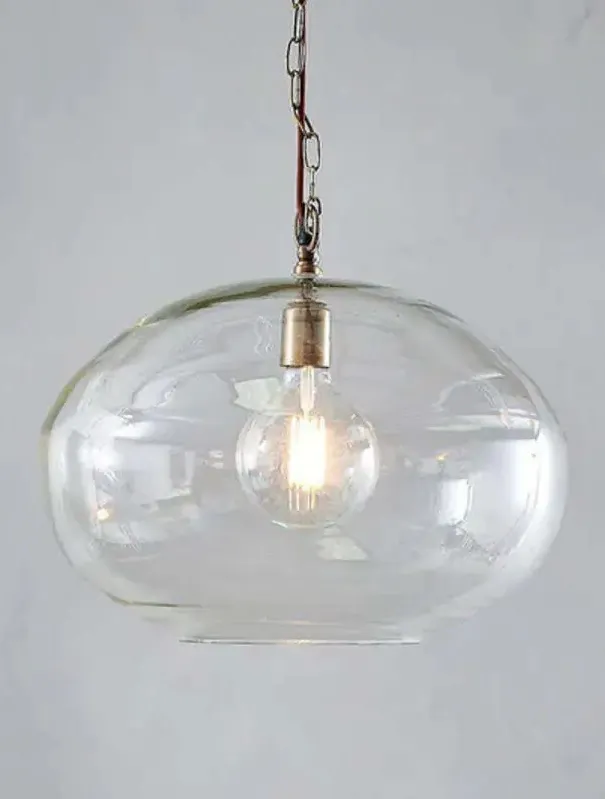
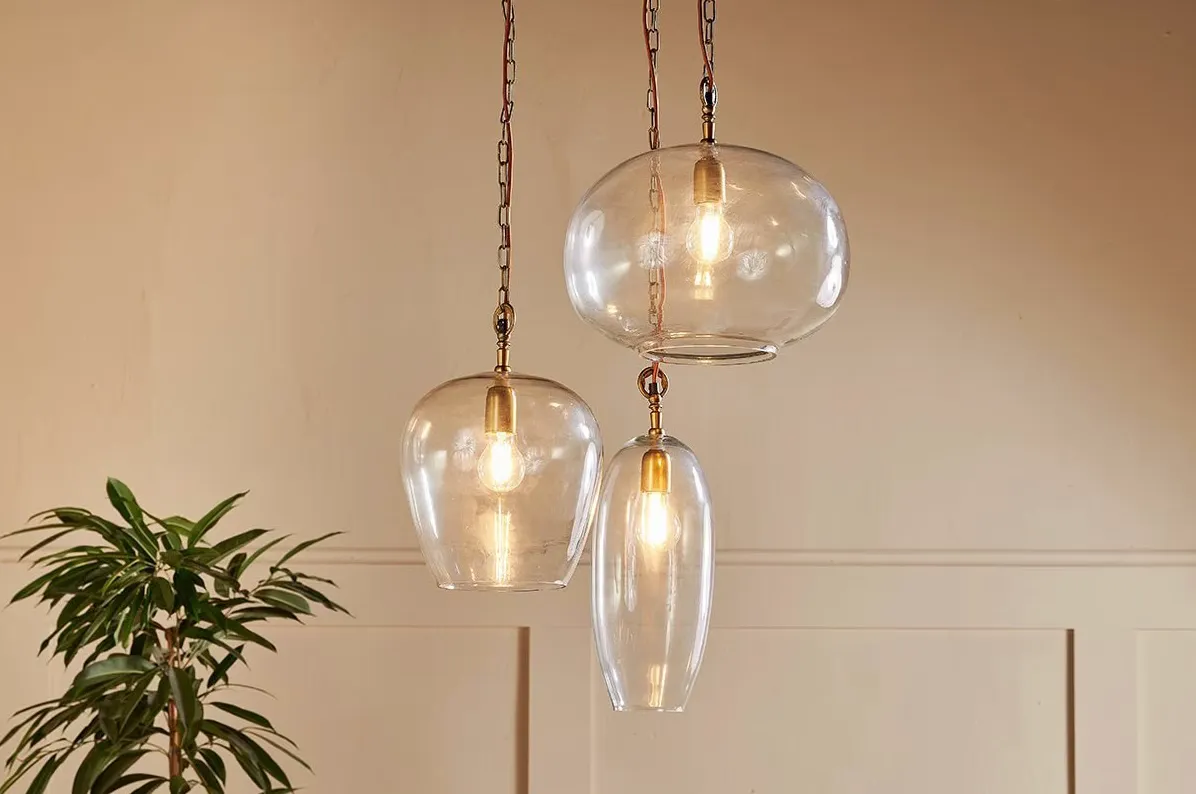
The hero of this list and the verdict for most kitchens, pictured here with its equally appealing cousins. The Otoro is hand-blown from recycled glass, and the recycling is visible in the object: the glass carries bubbles and faint tonal variation that a moulded clear shade never has. Go with the large round pendant, at £275 it sits mid-range for a hand-blown recycled-glass pendant, which is precisely what lets those bubbles read as craft rather than fault — cheaper recycled glass looks like a flaw, this looks like a decision. It gives sparkle and a visible bulb, so treat it as decorative-first and pair it with a good filament bulb on a dimmer, and add a directional source elsewhere if the island needs task light. As a single considered object over an island, nothing else here matches it for the money.
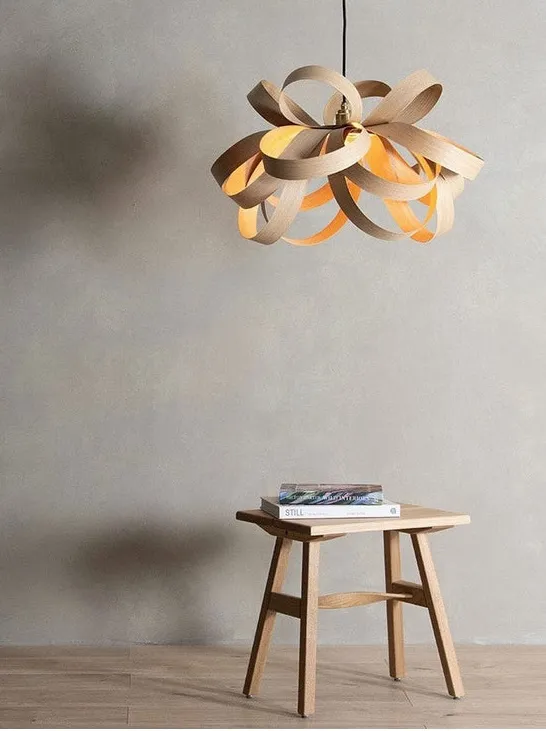
Not a kitchen pendant at all, and included because it is the strongest dining-table pick on this list. Tom Raffield hand-makes the Skipper in his Cornwall workshop, steam-bending overlapping petals of wood into a shade that reads like a woven basket — a single-maker process you can see in the object rather than a factory finish applied to it. That open, slatted construction is both the appeal and the limit: it diffuses the light and throws a patterned shadow across the ceiling, which is what a dining table wants and the opposite of what a worktop needs. So hang it over the table, not the island. It comes in ash, oak and walnut, and all three finishes are good; the decision is not really about the light but about the wood already in the room — match the shade to your table and floor tones rather than fighting them. If the room’s woods are mixed, or you are unsure, walnut is the safe default: a warm mid-brown that sits with the widest range of other timbers. At £375 you are paying for the maker and the steam-bending, not for light quality — buy it as a hand-made wood object overhead, and light the work surfaces some other way.
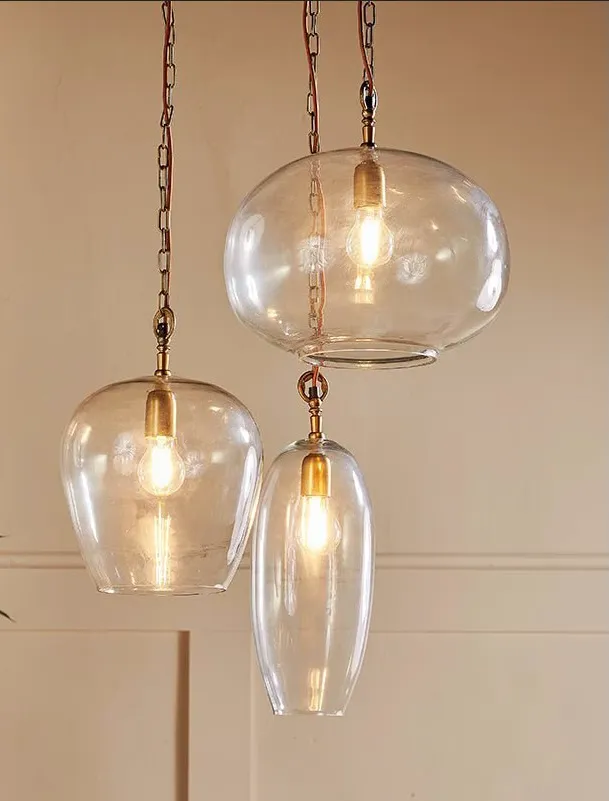
The same recycled glass as the £275 Otoro, grouped into a single cluster fitting that hangs several globes from one ceiling point. What you are buying is scale from one wiring position: the impact of three separate pendants over a large island without paying an electrician to add two more ceiling points. That is a real, specific advantage, and the honest limit of it is that it remains decorative glass — it reads at scale over a big island, but it is not doing more task work than the single Otoro. Buy it for reach across a long island, not as an upgrade in light quality.
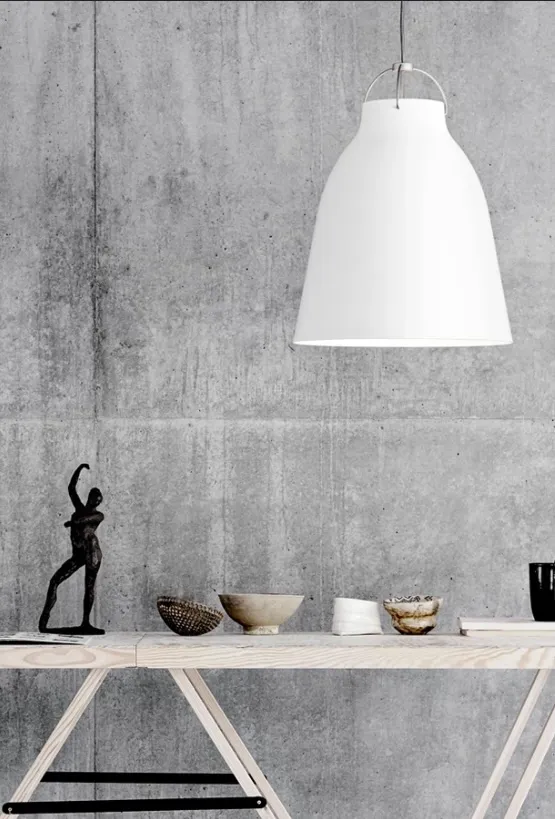
The design-classic benchmark, and the honest top-end comparison the rest of the list is measured against. Cecilie Manz designed the Caravaggio for Fritz Hansen in 2005; its shape descends from the opal “schoolhouse” pendants of early-twentieth-century institutional lighting, and its point is engineered diffusion — the opal shade and its proportions are tuned to give an even, glare-free light with no visible bulb. That is worth roughly £569 over a table people sit at and look up from, where glare is the whole problem. Over an island you stand at, where you want light concentrated on the surface and do not much care about glare from below, you are paying a design premium for optical work the situation does not need. This is the kind of authored light quality the study of the Arco lamp makes the fuller case for — genuine, and genuinely situational.
What the money buys as you climb
The three tiers are not just three prices; each buys a different thing. Under £150, you are frequently buying a shade rather than a finished pendant — budget for the fitting and bulb the photograph leaves out — and the metal is plated rather than solid. The £150–£300 band is where fittings arrive complete, brass gets thick-plated or solid, and hand-blown recycled glass carries the irregularity that separates it from a moulded copy: the material begins doing the aesthetic work the fitting used to. Above £300 you are paying for one of three specific things: scale from a single point (a cluster standing in for three pendants), a hand-worked wood shade from a named maker, or engineered optical diffusion with a named designer behind it. What you are not buying, at any tier, is more task light than a plain metal cone already gives you.
The verdict
For most considered kitchens the Nkuku Otoro recycled-glass pendant at £275 is the right call. It gives the room the hand-blown character it wants, its visible bubbles read as a decision rather than a default, and it does that job at less than half the price of the Danish design classic. If you buy one pendant from this list, buy that one.
Two exceptions, stated plainly, because the honest answer is not always the prettier one. If the pendants are doing real task work over an island you cook at, a matched pair of directional Dowsing & Reynolds metal cones at £129 each beats a single glass globe — a pool of light on the worktop is worth more there than sparkle overhead, and no amount of hand-blown glass changes that. And if the light hangs over a table people sit at and look up from, the Caravaggio’s engineered, glare-free diffusion earns its £569 in a way it never does over a chopping board.
Which returns to the one decision that runs under all eight: the shade before the fitting, the job before the object. Get the material right for how you actually stand in the room, and the row of three matched domes stops looking like the safe choice and starts looking like what it is — the picture everyone copied because it was already there.