Decide £8–£150+
Handmade ceramics: makers worth knowing at every price
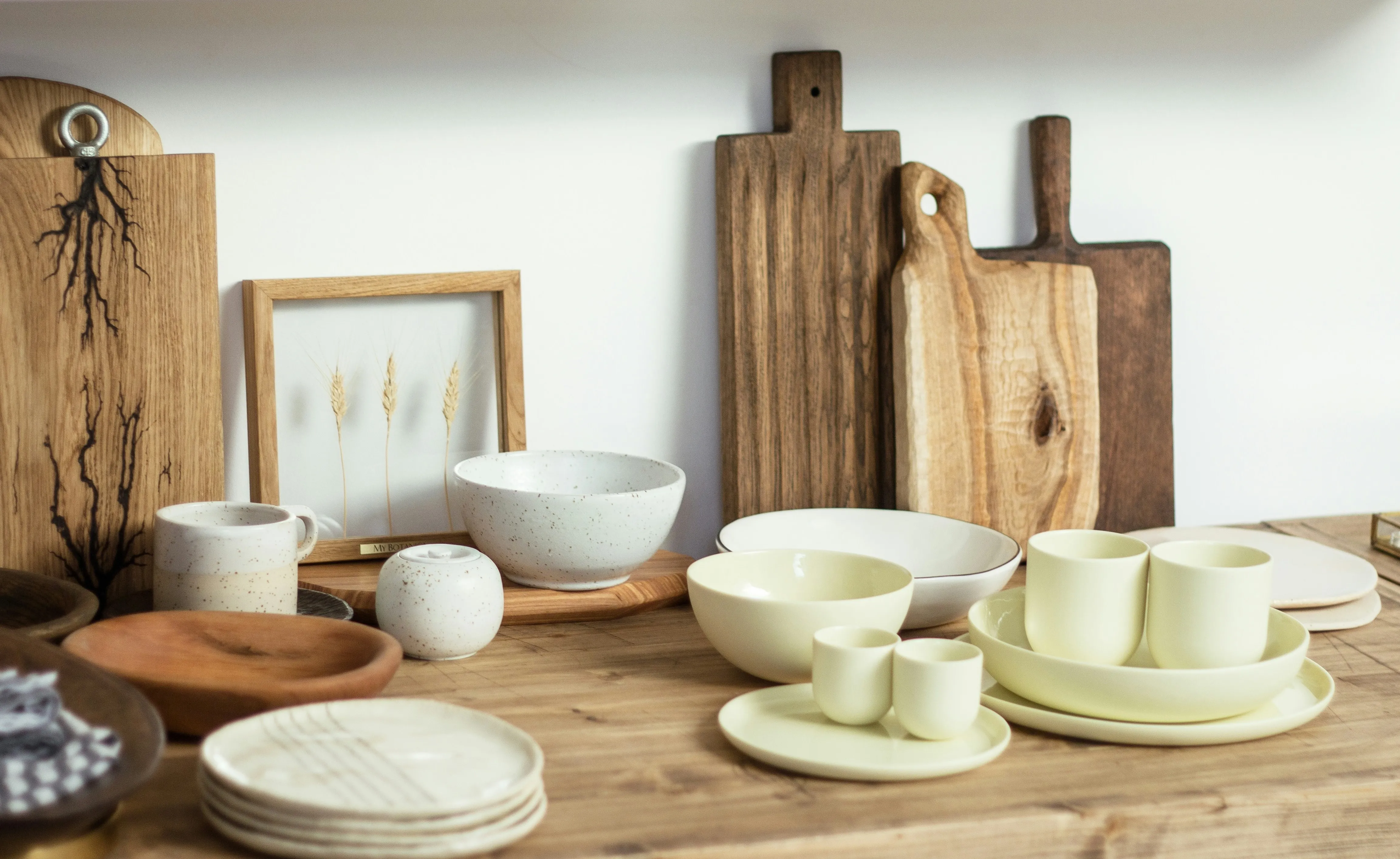
An Emma Bridgewater plate is made and decorated by hand in a Victorian factory in Stoke-on-Trent, passing through many pairs of hands — presser, glazer, sponge decorator, kiln — before it reaches a table. A Florian Gadsby bowl passes through one pair of hands, in a studio in High Barnet, and sells out within minutes of going online three times a year. Both are described, accurately, as handmade. They are not remotely the same purchase, and the word doing the work in both descriptions is the least reliable one on any tableware label.
“Handmade” now sits on a £6 supermarket plate and a £60 studio bowl with equal confidence. This is a guide to what your money actually buys as that number climbs — the three things that genuinely change, and the UK makers worth knowing at the price you can afford.
What ‘handmade’ actually means
There are three rungs on the ladder, and the jump between them is not gradual. The label reads the same on all three.
Factory production with handmade signifiers. A body pressed or cast in quantity, then given the marks we read as evidence of a hand: a reactive glaze that pools and varies from piece to piece, a throwing-ring texture moulded into the surface. The variation is real — a reactive glaze genuinely does behave differently on every plate — but no one threw it. This is the same distinction our walnut-tables guide draws between solid wood and a veneer over MDF: the surface is honest, the structure underneath is not what the word implies. A pressed-in throwing ring is a picture of handwork, not handwork.
Small-batch workshop. A small team, hand-throwing or hand-finishing in short runs, usually with some mechanisation and assistants. Here a person really is at the wheel or the glaze bucket, the runs are limited, and the pieces vary because they were made separately rather than designed to look as though they were.
Studio pottery. One maker, wheel-thrown start to finish, signed. The glaze is mixed and applied by the person whose name is on the base, the surface is a one-off that cannot be repeated, and when the piece breaks there is no matching replacement to order.
Four things move as you climb: the process (many hands on a line, then a small team, then one maker), the glaze (a reactive recipe, then genuine hand-application, then a surface that will never recur), the replaceability (a matched set you can re-order for years, then small runs, then a one-off), and simply who touched it. Keep those four in view and the price differences stop being mysterious.
The everyday tier is not where a handmade table is won or lost, and it should not carry the craft budget. These are the eight plates and bowls a fork meets every day and a dishwasher takes wet; the honest priorities are durability, oven-and-dishwasher tolerance, and being able to replace a smashed plate in two years’ time.
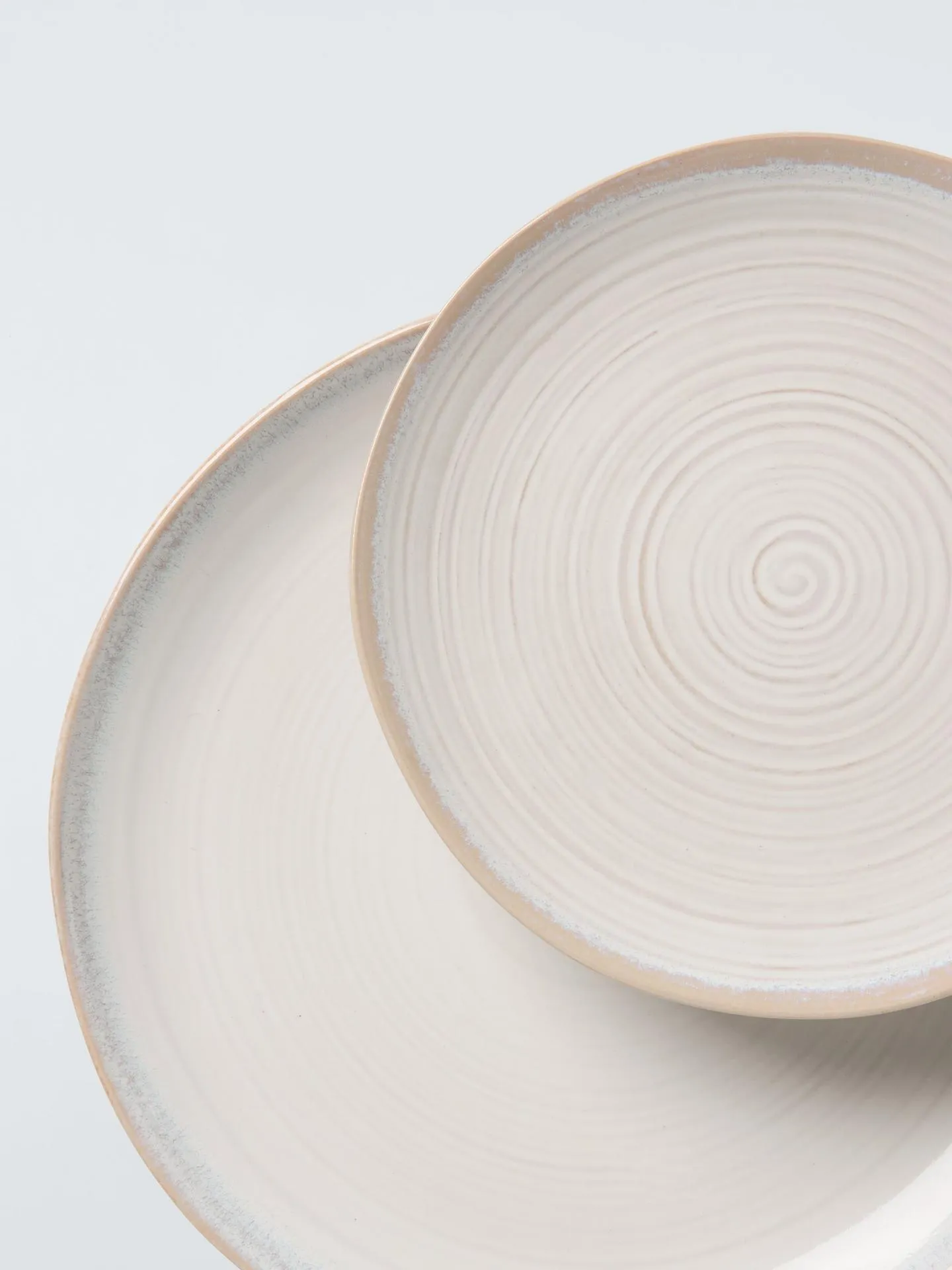
John Lewis’s own Skye range is reactive-glaze stoneware — the speckled, off-white, no-two-identical surface that reads as handmade at a glance. It is almost certainly not made in Britain, so take it for what it is: an imported reactive glaze, a signifier of the handmade rather than the thing itself. What earns it the everyday lead anyway is not the look but the logistics. It is dishwasher- and oven-safe, you can replace a broken plate from stock for years, and John Lewis stands behind it. For the plates you reach for without thinking, that is the right set of priorities, and paying more here buys you very little your fork can detect.
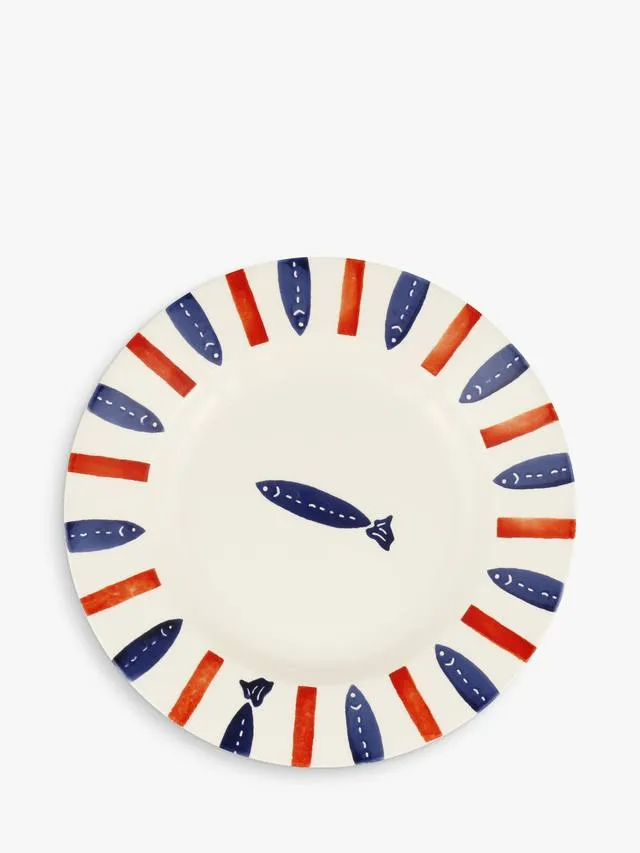
If genuine British manufacture matters to you more than the plain reactive look, Emma Bridgewater is the everyday pick that has it: made and hand-decorated in a Victorian factory in Stoke-on-Trent since 1985, in patterns you can re-order for years. Two honest caveats. It is earthenware, not high-fired stoneware, so it is a little softer and less thermally hardy than the Skye. And the spongeware decoration is a specific, English-country look — polka dots and hens, not a quiet minimal surface. Buy it for the hands and the place, knowing that is what you are choosing, and that the decoration is the point rather than an accident of glaze.
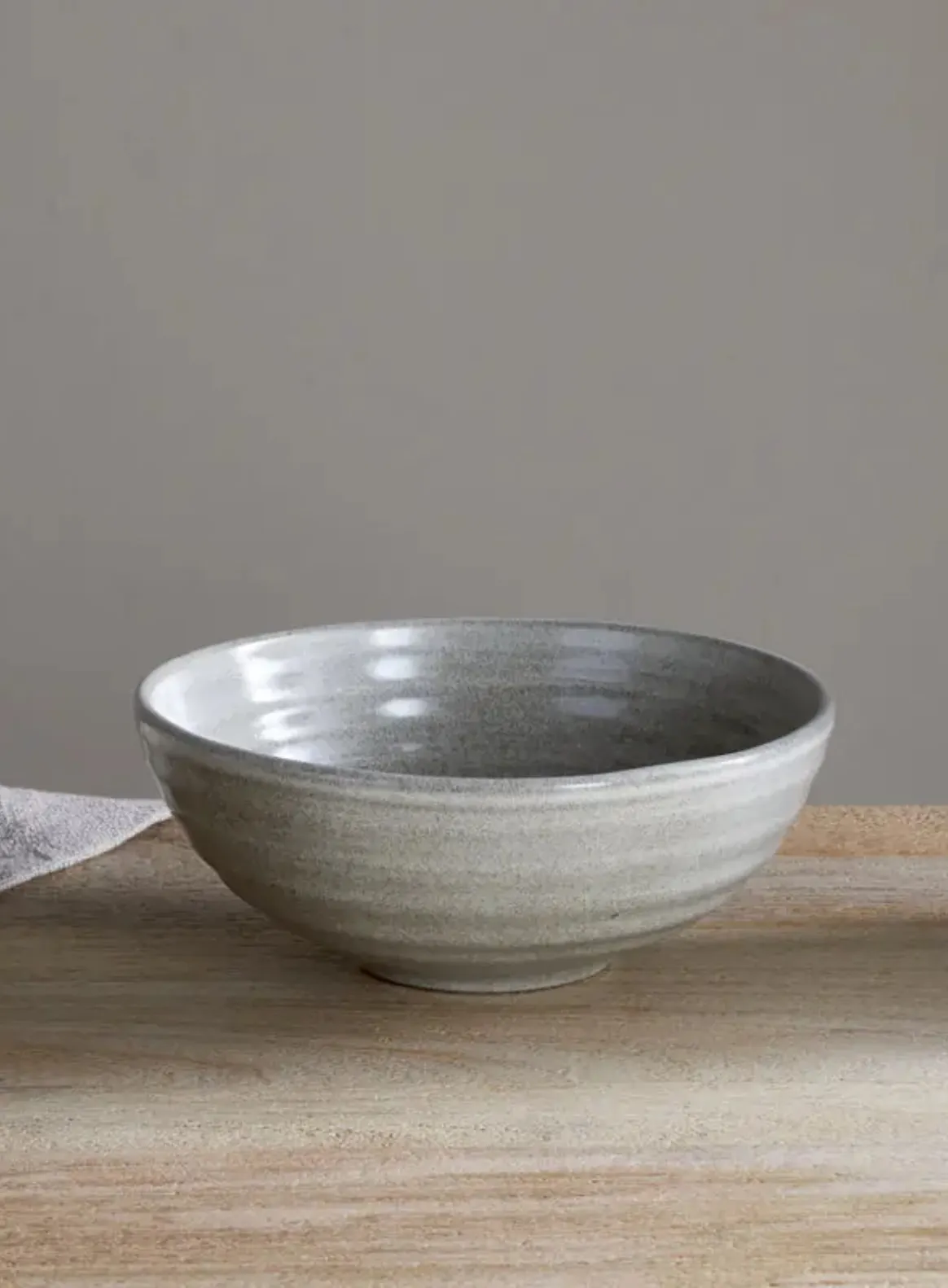
Nkuku’s dinnerware sits frankly at the signifier end: reactive glazes and hand-finished irregularities, designed in Devon and made abroad. Bought knowingly it makes a good-looking table, and the palette is quieter than most at the price. Just don’t read the throwing-ring texture on a production piece as the mark of a wheel — it is the moulded picture of one, and the price is fair on that understanding, not on the handwork it gestures at.
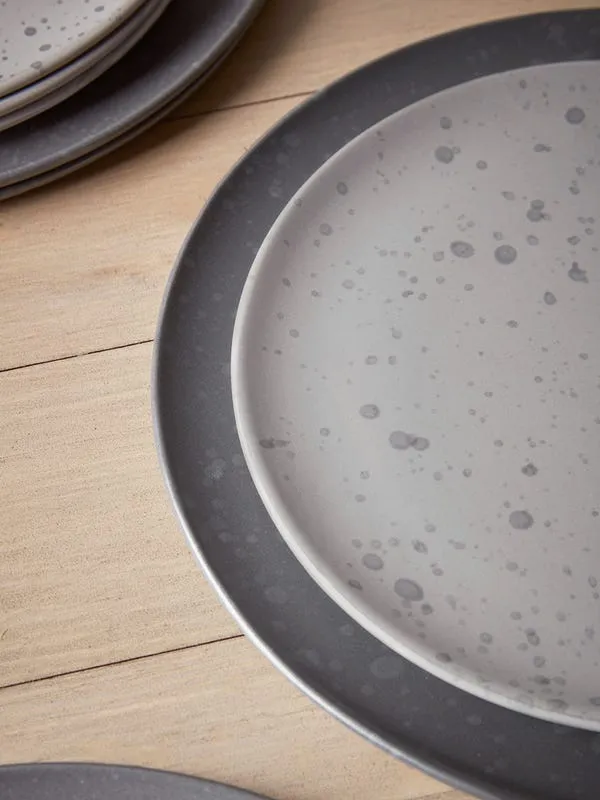
Cox & Cox is where you fill in breadth — serving bowls, odd sizes, a second colourway in a compatible palette — rather than the source of the core eight. At £12–£30 a piece it does that job well. Just build the everyday set on one body and use this to extend it, not to anchor it.
This is the rung where handmade stops being a signifier and starts being a description. You are paying for a real hand at a real wheel, shorter runs, and variation that happened rather than was designed.
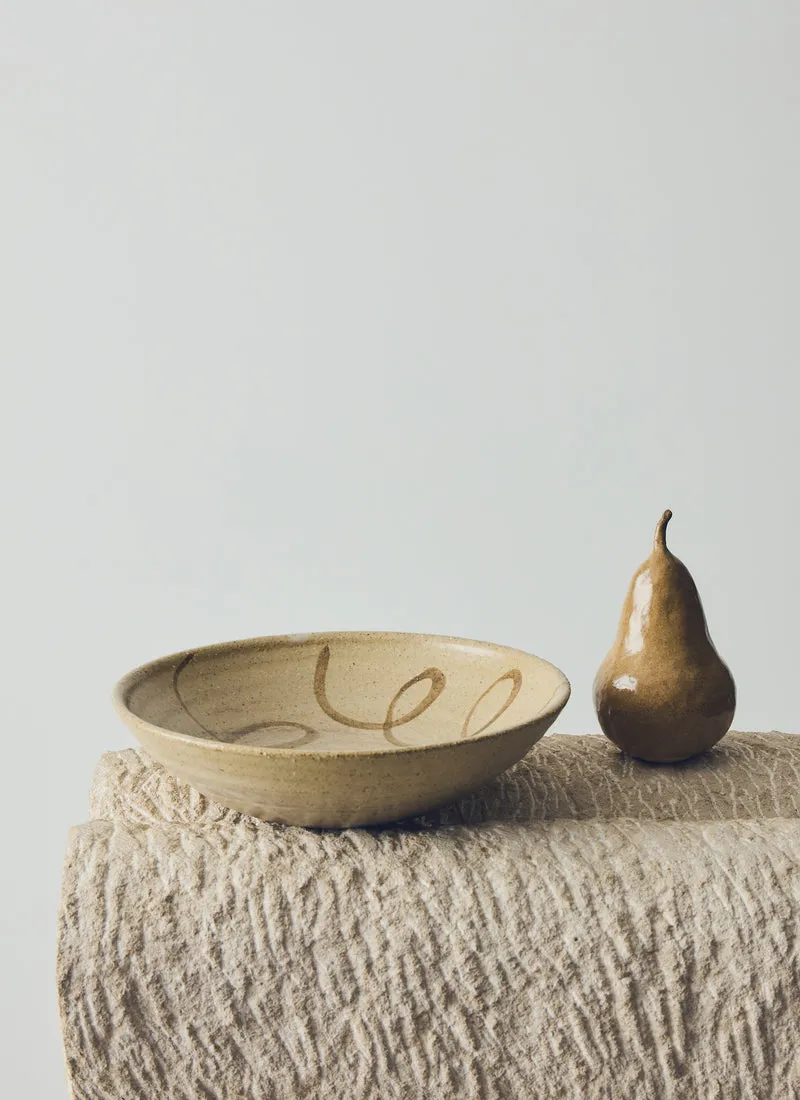
Toast’s ceramics are genuinely hand-thrown, and its New Makers programme returns the full profit from a maker’s pieces to that maker — a specific, checkable claim rather than a mood. At £20–£48 a piece the step up over the everyday tier buys a shorter run and a named process, and it is the pick for a reader who wants real workshop pottery without either the studio price or the sell-out scramble two rungs up. This is the middle path, and for most tables it is the sensible ceiling.
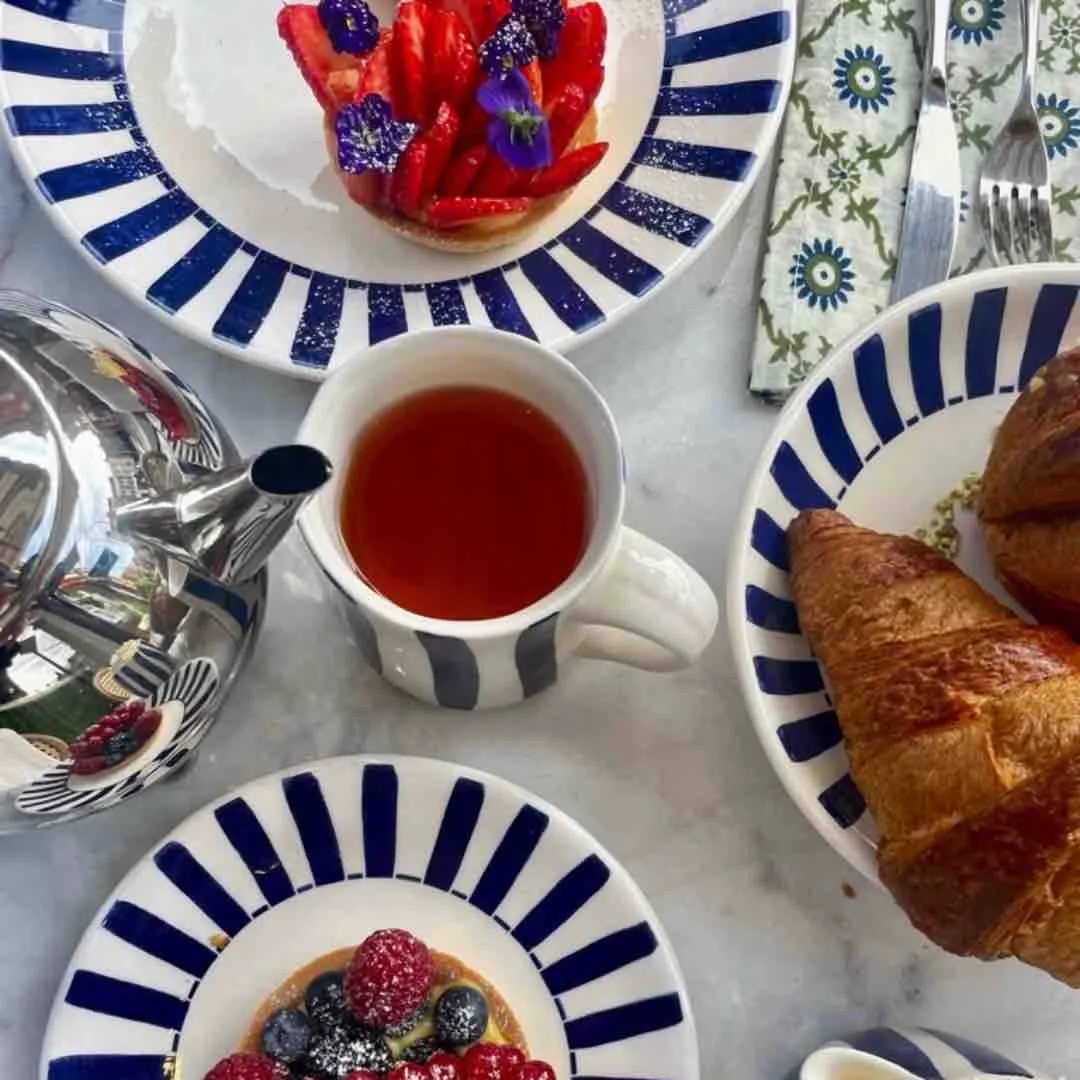
Villa Bologna has hand-painted pottery in Malta since 1924. What the price buys, over an imported reactive plate, is a named workshop and hand-painting with the brush-marks still visible in it — decoration applied by a person, not printed. A sixteen-piece set runs to around £500, which is the honest cost of that labour across a full service; more often the sane move is a few painted pieces against a plain everyday set. For a British version of this tier, Highland Stoneware in Lochinver hand-throws and hand-paints every piece and signs each one — no affiliate route and six-week waits, but genuinely UK small-batch if that is the point for you.
At the top of the ladder are single makers, and the two worth knowing first are Florian Gadsby and Lisa Hammond MBE. Gadsby trained under Hammond at her Maze Hill Pottery in south-east London, and Hammond sent him on to Ken Matsuzaki in Mashiko, Japan — Matsuzaki an apprentice of Tatsuzō Shimaoka, himself a pupil of Shōji Hamada, the potter at the centre of the mingei folk-craft movement. That lineage is not decoration: it runs straight back to the argument in Wabi-sabi was never a look, that the reverence for the plain handmade object is a made thing with a history, not a natural fact. A Gadsby beaker carries that whole chain of hands in it.
A Gadsby release goes up three times a year and sells out in minutes; a Hammond piece comes from a gallery or her studio. Nothing in this band has a buy button attached, which is precisely how you can tell it is being described to you rather than sold to you. What the studio tier buys, over the workshop rung, is not durability — there is no ten-year guarantee here — but a surface that will never be repeated and a repairability that assumes you will keep the thing for decades. You are buying the one, not the set.
How to actually spend
Buy the everyday eight — the plates and bowls that meet a fork daily and get stacked wet — from the everyday tier: the John Lewis reactive stoneware if you want the plain speckled look and total replaceability, Emma Bridgewater if you want British manufacture and the pattern appeals. Do not spend more there than durability and replaceability require.
Then, if a handmade table genuinely matters to you, concentrate the craft money on one or two high-contact pieces where a single pair of hands actually shows — a serving bowl carried to the table, a jug used every morning — from the studio tier. This is the same logic as concentrating a room’s budget on the sofa: spend where your hand and eye land most often, and let everything else stand down. Toast is the middle path if you want real hand-thrown work throughout without the studio price or the scramble. What you never do is put forty pounds of provenance under a fried egg.
A plate that passed through many hands in a Stoke factory and a bowl that passed through one in a Barnet studio are both handmade, and both are worth owning. They are simply for different things: one to be reached for without thought a thousand times a year, the other to be noticed every time it is. Knowing which is which — and refusing to pay studio prices for factory work, or factory prices for studio attention — is the whole of the skill.