Decide £11–£50
The best design books of the last decade: which to read, which to display

An American company called Books by the Foot will sell you exactly what its name promises: hardbacks priced by the linear foot, bundled by subject, by binding, or — if you ask — by the colour of their spines. A metre of “modern design” in muted earth tones costs about the same as a mid-range floor lamp, arrives sorted to match a paint chip, and need never be opened. It is the book reduced to its last function: a coloured block of the right height, holding up a shelf and a point of view about the person beneath it.
That service exists because it answers a real demand, and the demand is worth taking seriously rather than mocking. A design book genuinely is, among other things, an object — and some are bought, reasonably, to be looked at rather than read. The mistake is not buying a book as an object. The mistake is not knowing which kind of book you are buying, and paying reading prices for a thing you will only display, or display prices for a thing you should have read.
Three jobs, three different purchases
A design book is bought to do one of three things. It is read — cover to cover, once or many times, for its argument. It is consulted — kept within reach and opened to a particular building, designer, or idea when you need it. Or it is kept as an object — set out where it can be seen, opened rarely, valued for its production and its presence as much as its text. These are not a hierarchy. A book that is excellent at one can be a poor buy at another, and the prices rarely track the job: the book you will reread most here costs £11, and the one you will mostly look at costs five times that.
So the only useful question to ask of each is the plain one: what is this book actually for? Seven books from the last ten years, grouped by what they are about and sorted by what they do. Where the honest answer is that a book earns its place as a thing to own rather than to read, that is said plainly too — it is still a recommendation, just an accurate one.
Architecture
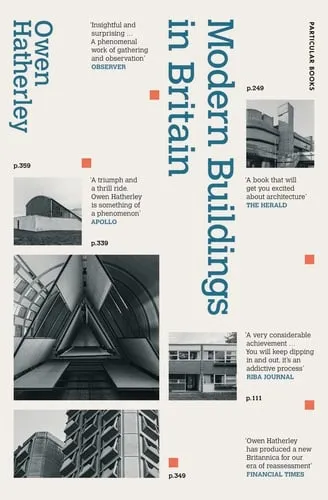
Owen Hatherley’s gazetteer runs to more than 600 pages and a few hundred buildings, ordered by region, each given a short entry in prose that is doing the real work — the photographs, in duotone and colour, support the writing rather than replace it. This is the architecture book on the list you read, in long sittings, the way you would read a good travel writer on places you may never go. Hatherley knows the post-war record in Britain better than almost anyone writing for a general audience, and he is opinionated in the specific, evidenced way the subject needs: he will tell you why a Sheffield housing estate is a better building than a listed cathedral extension, and the reason will hold. At £40 it is the most expensive thing here you buy primarily to read, and the page count justifies it on a per-hour basis alone. If you want the argument behind why this period matters at all, we made our own case in what mid-century modernism was actually for; Hatherley is where you go next, at building-by-building resolution.
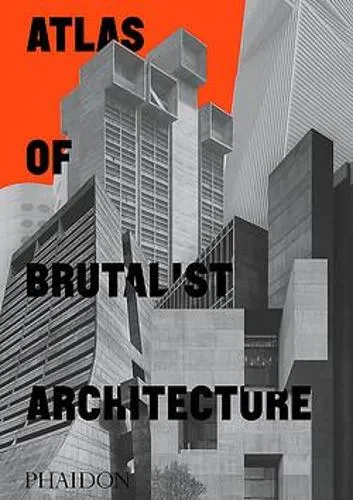
Phaidon’s atlas maps more than 850 concrete buildings across the world, in black-and-white photography chosen for drama as much as documentation. It is a reference book and, frankly, an object — you consult it to settle an argument or find a building you half-remember, and the rest of the time it sits out and earns its keep by being seen. That is not a criticism, but it is the honest description, and it changes what you should pay. Buy the standard classic-format edition at around £50, not the oversized large-format version that runs past £100: the photographs are the same, and the only thing the larger volume adds is weight and shelf dominance. As a book to read end to end it would be a strange purchase. As a thing to own and dip into, with genuine reference value attached, it is a fair one — provided you know that is the deal you are making.
Interiors
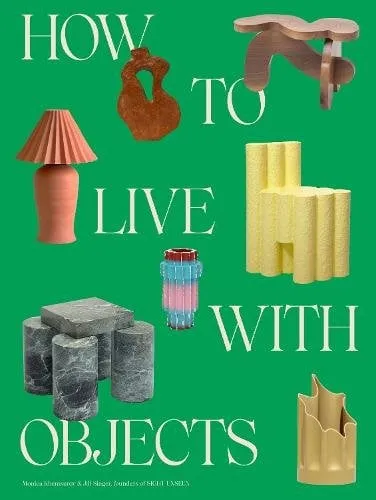
Monica Khemsurov and Jill Singer, who founded the design publication Sight Unseen, have written an interiors book that is about choosing rather than arranging. It treats the objects in a room as things with histories, makers and reasons, and asks how to assemble them into a home that means something rather than one that photographs well. At £50 it sits at the top of the interiors prices here, and you are paying for the production — heavy stock, a great many commissioned images — as much as the text, which puts it on the read-once-then-consult border. The reason to own it over a glossier rival is that its argument is congruent with the way we think about a room: that coherence comes from understanding what each object is for, not from spending evenly across all of them. It is the considered pick, as long as you go in knowing you are buying a substantial object as well as a guide.
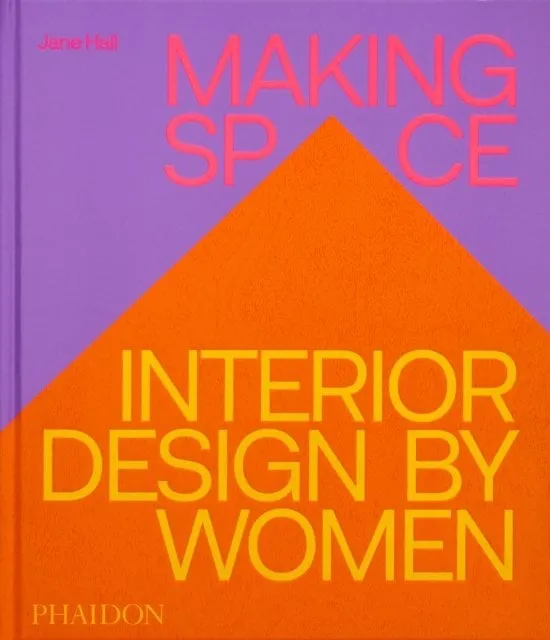
Jane Hall’s survey collects 250 women who shaped interior design from the early twentieth century to now, and it carries an argument under the format. Much of this work was credited at the time to husbands, firms, or no one: Eileen Gray’s E-1027 was for decades discussed mainly through Le Corbusier, who painted murals on its walls without her consent and whose presence nearly erased her authorship of the house. Hall’s book is the corrective, done by accumulation — page after page of attributed work until the omission in every earlier survey becomes impossible to miss. It functions as a consult-and-keep reference, organised for browsing rather than continuous reading, and at £39.95 it is priced like the illustrated survey it is. The history it carries is specific enough that the book never has to editorialise; the names and the dates make the case on their own.
Material culture
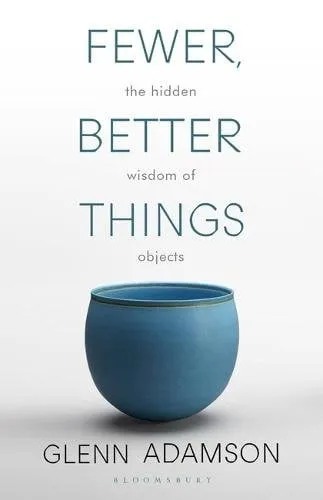
Glenn Adamson, former director of the Museum of Arts and Design in New York, has written the cheapest book on this list and the best. Fewer, Better Things is about material intelligence — the gradually lost ability to understand how things are made, what they are made of, and why that knowledge is worth keeping. It is a paperback of ideas at around £11, the kind of book you read, annotate, and return to, and it does the thing the whole of The Grain is built around: it changes how you look at every object you already own, before you buy another one. Its argument is the same one underneath our £3,000 living room guide — that concentration beats spreading, that a few things understood properly outperform many things bought evenly — and the same one behind knowing what “walnut” actually means on a price tag. If you buy one book from this list, buy this one, and not because it is the cheapest. It is the cheapest and it is the most useful, which is the entire point.
Alice Rawsthorn, for years the design critic of the International Herald Tribune, argues that design is not a category of object but a way of acting on the world — and the revised edition adds a chapter on design’s response to the climate emergency that the original, from 2018, could not have written. This is a book of argument, small-format and around £16, with almost no pictures, which tells you immediately what it is for: reading and thinking, not shelving. It reads well alongside Adamson — where he is concerned with understanding the things that already exist, she is concerned with what design does when it decides to make new ones, or to refuse to. Together they are the two cheapest books here and the two with the most to say, which is the price argument of this whole piece in miniature.
The wildcard
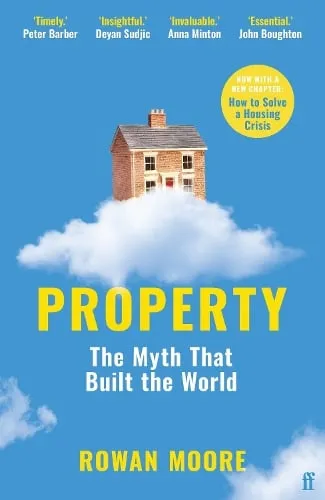
Rowan Moore, the architecture critic of the Observer, has written a book that looks like architecture and is really about money. Property traces how the idea of owning land and buildings — a myth, in his telling, rather than a natural fact — has shaped cities, politics and the homes most people cannot afford to buy. It is on this list because the design books that matter eventually stop being about objects and start being about the forces that produce them, and few do it this directly. A paperback of argument at around £11, read straight through. It is the one title here that justifies the breadth of the rest: a design library that contains only beautiful objects and never asks who paid for them, or who was priced out, is a decorated shelf, not an education.
The verdict
If you buy one book from this list, buy Adamson’s Fewer, Better Things. It costs about £11, it rereads better than anything else here, and it is the only one that changes how you look at the objects already in your house — which is worth more than any single recommendation it might have given you. If what you want is one book to keep out and be seen, the Atlas of Brutalist Architecture earns it, at the classic-format price and not the inflated one; just buy it knowing you are buying an object that consults well, not a book you will read through.
The pattern is not an accident. The two cheapest books here are the two best, and the most expensive are the ones you will mostly look at. Price, in design books as in furniture, tracks production far more reliably than it tracks worth. Everything else on this list is recommended on its own terms — Hatherley to read, Hall and Khemsurov-Singer to consult and keep, Moore to be unsettled by — and not ranked against those two.
A shelf bought by the metre says one true thing about its owner and nothing else. A shelf you assembled, where the £11 paperback is the spine you broke and the £50 atlas is the one still flat, says considerably more — and most of it is in the books you actually opened.