Decide £389–£3,119
Mid-century modern sofas: what £1,000, £2,000 and £4,000 actually gets you
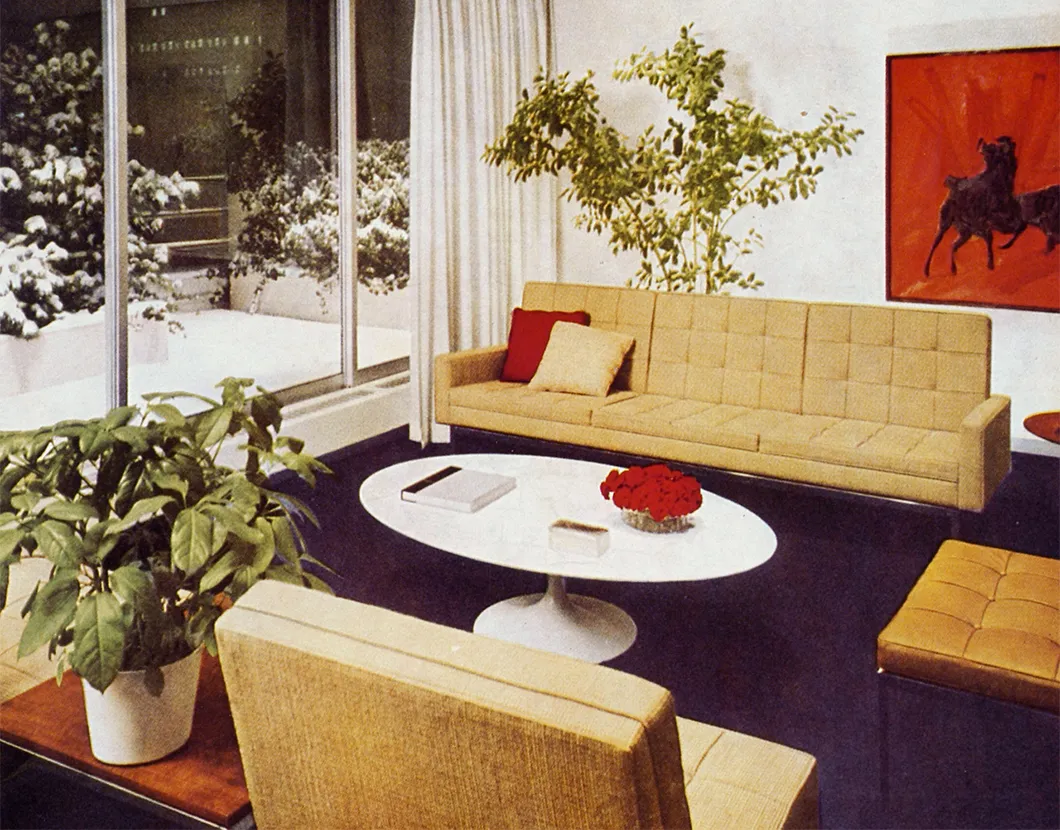
Florence Knoll designed her most famous sofa in 1954, and she was not trying to make furniture. She was trying to resolve an architectural problem. The open-plan offices her firm was building had seating areas that functioned as rooms within rooms — they needed objects that would define space without enclosing it. The sofa that resulted was low, linear, and resolved: a platform on thin steel legs, its geometry borrowed directly from the curtain-wall buildings it was placed inside. Knoll International still makes it. A three-seater costs £9,585.
This piece is not about that sofa. It is about what the Knoll sofa represents as a type, and what you are buying — or declining to buy — when you spend £500, £1,500, or £3,000 on a mid-century modern three-seater in 2026.
The mid-century modern sofa is one of the more legible objects in contemporary domestic life. Its visual grammar is immediately recognisable: low profile, tapered wooden legs, clean horizontal lines, cushions that sit rather than slump. It was designed, across several decades and many designers, as a conscious argument against the overstuffed, tasselled, formally upholstered furniture of the Victorian and Edwardian eras. The argument was political as much as aesthetic. If the old sofa said “settled wealth,” the new one said “rational intelligence.” If the Victorian sofa was for receiving guests, the mid-century sofa was for living in a room. The tapered leg was not merely stylistic. It let you see the floor beneath the furniture, which made smaller rooms feel larger — a genuinely democratic design gesture in an era when most people did not have large rooms.
This history matters not because it determines what you should buy, but because it explains what you are looking at when you evaluate these sofas. The cheap version that has a vaguely similar silhouette is borrowing the language without committing to the argument. The expensive version is the argument. Whether the argument is worth the premium is the question this piece tries to answer honestly.
What changes at each tier
Before the sofas, it is worth being precise about what money actually buys in this category, because the marketing language is uniformly useless. “Solid hardwood frame,” “high-density foam,” and “premium upholstery” appear at every price point without meaning anything consistent between them.
The frame is the most consequential variable. Below around £1,000, frames are typically engineered wood — plywood or particle board with softwood elements. These are not inherently bad; a well-joined engineered frame outlasts a poorly-joined solid one. Above £1,500, you begin to see solid hardwood joinery, often kiln-dried beech, with corner blocks glued and screwed rather than stapled. This difference is invisible for three years and decisive after ten.
The foam tells you more than almost any other single factor. High-density foam (around 40kg/m³ or above) holds its shape through thousands of sittings; lower-density foam compresses and stays compressed. The test is simple: sit on the sofa, stand up, look at the seat cushions. They should return to their original profile within a few seconds. On cheaper sofas they often do not, and they will not improve.
The geometry is the least discussed variable and possibly the most important for this category specifically. A correctly proportioned mid-century sofa has a seat height of around 43cm, an arm height roughly level with the seat, and a back height that is low enough to float rather than loom in a room. These measurements were not arbitrary — they came from designers who thought hard about how a human body sits in a room rather than at a desk. At lower price points, the proportions are often quietly adjusted: the seat is deepened for comfort, the back is raised slightly, the legs shortened. The sofa still reads as “mid-century inspired” from across a showroom but it has given up the argument.
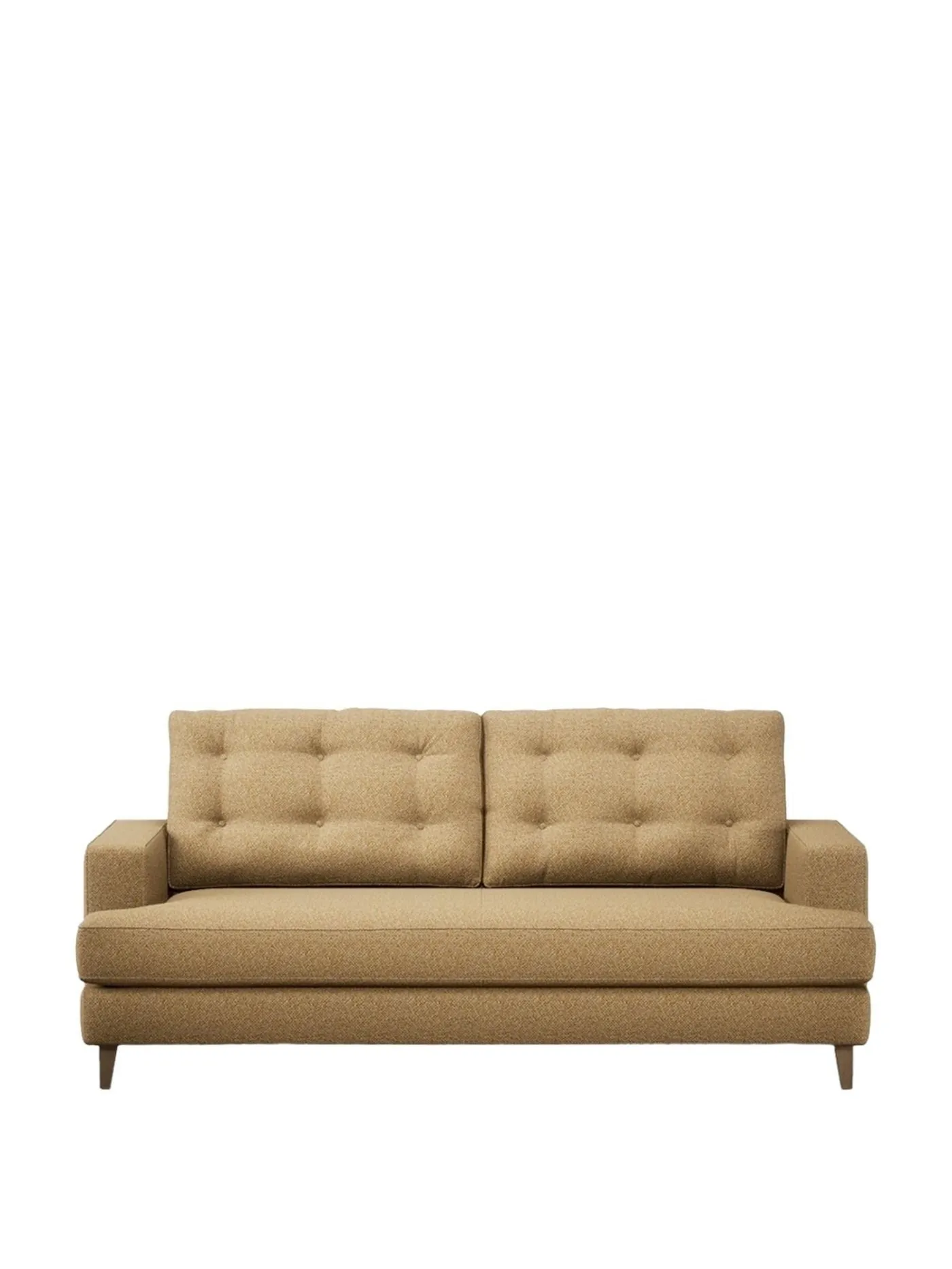
The Mistral has been Heal’s bestselling sofa for over a decade — a piece of commercial information that is also an editorial verdict. Bestsellers at Heal’s tend to earn that position through quality rather than price, because Heal’s customers are not buying on price. The Mistral is built on a kiln-dried hardwood frame with corner blocks, and the cushions use a fibre-wrapped foam that the company has refined across multiple iterations. The piping and the symmetrical lines are not decorative; they are the external evidence of a frame made to a specific geometry rather than approximated.
What Heal’s is selling at £3,119 is not luxury in the conventional sense — it is not particularly soft, and it is not aggressively comfortable. What it is, specifically, is a sofa that has been designed by people who understand mid-century proportions, built by craftspeople who have been making variants of this form for decades, and constructed to last. The seat height is correct. The arm height is controlled. The back cushions sit where they are supposed to sit. It will look identical in fifteen years to how it looks today.
The honest case for spending this amount is an amortisation argument. A sofa that lasts twenty years, bought at £3,119, costs £156 per year. A sofa bought at £1,000 that needs replacing in eight years costs £125 per year and goes to landfill. The sums are close; the objects are not.
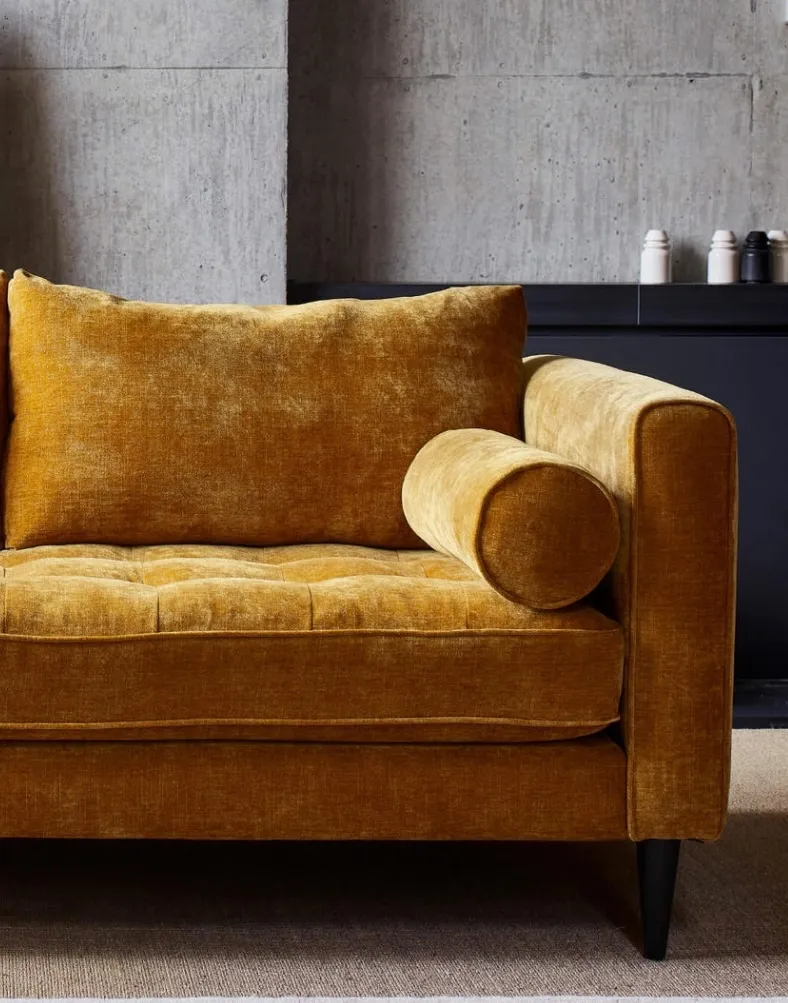
Arlo & Jacob is less well known than Heal’s, which means the Leon is frequently overlooked in favour of the Mistral, which is a mistake. The two sofas occupy the same quality tier and the same design philosophy: kiln-dried hardwood frame, considered proportions, upholstery that reads as fabric rather than as “fabric.” The Leon’s profile is if anything slightly cleaner and more austere — the arm is a little lower, the back a little more linear — which suits rooms built around a more minimal version of the mid-century argument. At £2,395 it is meaningfully less expensive than the Mistral for comparable construction, and the configurable options (filling, feet, fabric) mean the final object can be adjusted to the room rather than adjusted around.
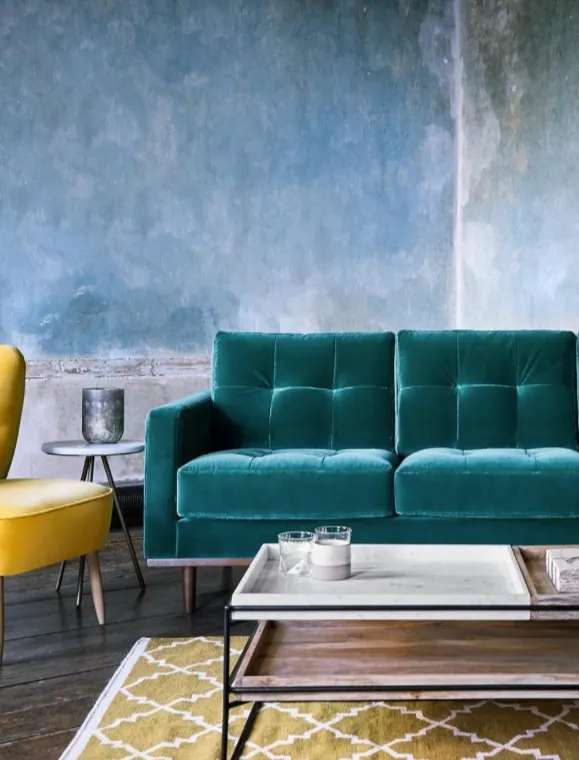
Swoon positions itself as a direct-to-consumer brand that transfers showroom savings into product quality, and the Berlin is reasonable evidence that this is not purely marketing. At £1,819, the frame construction is solid hardwood, the foam is denser than the entry tier, and the velvet upholstery — available in multiple colourways — has a weight and pile that reads as intentional rather than approximate. The Berlin’s proportions are correctly mid-century: the seat height is around 43cm, the taper on the legs is proper rather than merely decorative.
The honest caveat is that Swoon sells without showrooms. Velvet in particular does not render reliably on a screen — the difference between warm slate and cool grey is not always apparent until delivery. Order fabric samples before committing to a colour.
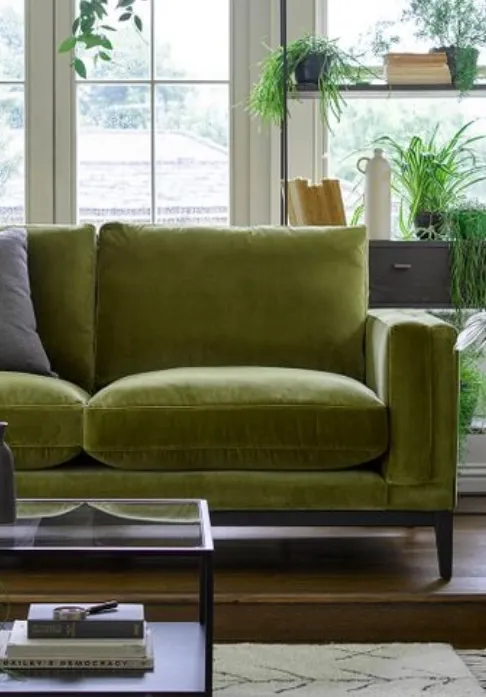
More tailored in its silhouette than the Berlin, the Costello sits at the quieter, more restrained end of the mid-century market. sofa.com operates showrooms across several British cities, which matters when spending over £1,000 on upholstered furniture: sitting on the actual object, in the actual fabric, alongside a sample of your flooring, is worth the journey. The Costello’s seat depth is closer to the original proportional argument than some competitors who have widened and deepened their seats to prioritise lounging over form. It is the right choice for rooms where the geometry of the sofa is doing work, not just occupying space.
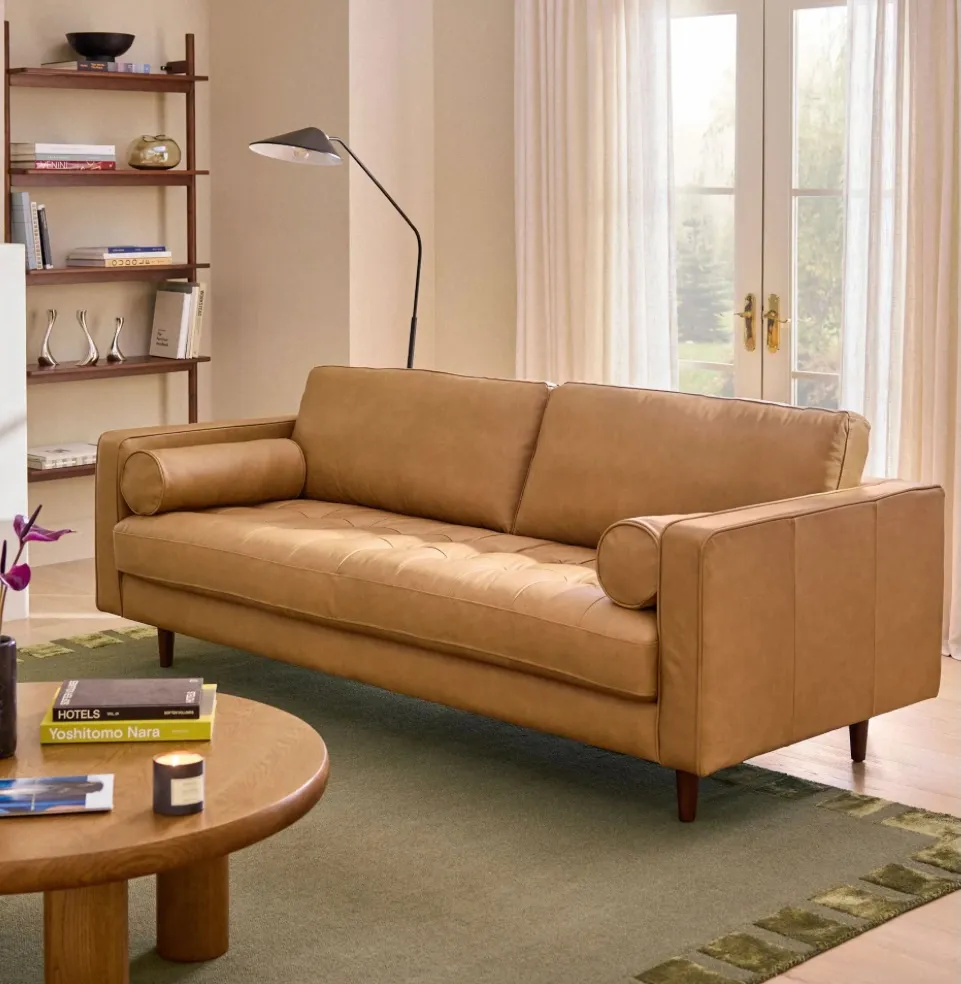
Article ships from North America and does not offer UK delivery directly, so the Sven requires a freight forwarder or transatlantic purchase arrangement. This is worth flagging honestly rather than obscuring: factor in import duty, VAT, and forwarding costs, and the landed price in the UK is closer to £1,600–1,800 depending on the exchange rate and forwarder. The reason to consider this additional complexity is that the Sven is the most widely referenced mid-century sofa at this price tier in North American design publishing, and for good reason — the tufted back cushions are correctly proportioned, the solid wood frame is well-constructed, and the leather ages rather than wears. If you have a route to importing it, it earns the effort.
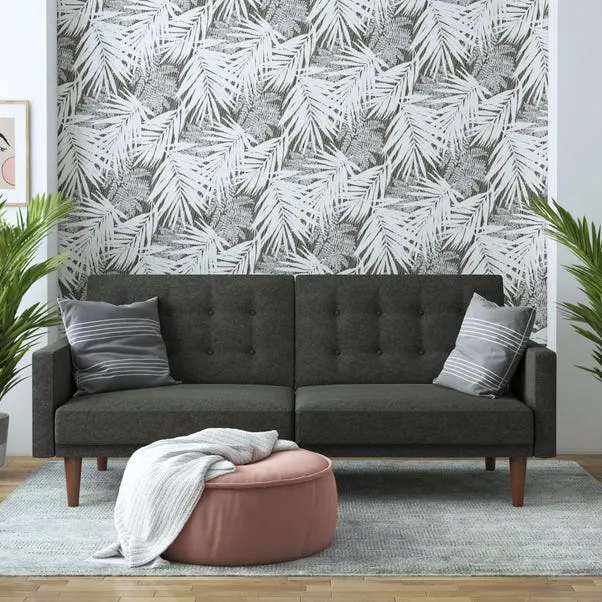
The Wimberly is not trying to be the Mistral. Its frame is lighter, its foam will compress over time, its proportions borrow the mid-century vocabulary without fully committing to it. It is included in this guide not as a compromise recommendation but as an honest account of what £389 buys — and that account is this: for a two-year rented flat, a spare room that will see occasional use, or a first sofa bought with the clear intention of replacing it within five years, the Wimberly is a rational choice. It reads as mid-century from across the room. It will not embarrass a considered interior in the short term. It knows what it is, which is more than can be said for some sofas twice its price that pretend to be something else.
The mid-century modern sofa is not a complicated object. It is a low platform on visible legs, and it was designed to make small rooms feel larger and ordinary people feel like they were living with intention. The cheapest version of this idea costs £389. The most expensive version we would recommend costs £3,119. Both are honest expressions of the same argument. The question is not which one is better — the Mistral is clearly better — but whether the difference is worth eight times the money. For a sofa you plan to own for fifteen years, in a room you care about, it probably is. For a rented flat you will move out of in three years, it probably is not. The sofa does not know the difference. You do.